
Please Choose Your Language
Views: 167 Author: Site Editor Publish Time: 2026-09-01 Origin: Site
Manual deburring often creates a critical production bottleneck in manufacturing facilities. It compromises part consistency, inflates labor costs, and poses significant ergonomic safety risks to workers. Relying on hand grinders yields unpredictable results across different shifts. You need a better approach. Enter the deburring machine. We define it not just as a basic finishing tool, but as a strategic automation asset. It standardizes edge quality and radically accelerates your overall throughput. Moving from manual grinding to automated finishing requires careful planning. You must align equipment capabilities with specific material geometries. You also need to match daily production volumes and strict compliance standards. In this guide, you will learn how these systems operate. We will explore different equipment types and evaluate key selection criteria. You will discover how to navigate implementation risks securely. This ensures a seamless upgrade to automated metal finishing operations.
A deburring machine automates the removal of burrs, sharp edges, and slag created during laser cutting, punching, or CNC machining.
Choosing the right system requires evaluating part geometry, material composition, and the specific finish required (e.g., simple edge breaking vs. uniform edge rounding).
Implementing a metal deburring machine shifts operational expenses from unpredictable manual labor to predictable machine cycles and abrasive consumable schedules.
Safety considerations—specifically wet vs. dry dust collection—are mandatory evaluation criteria when processing mixed metals.
Automated deburring relies on highly controlled mechanical friction. Motors drive specific abrasive media across part surfaces. You might see abrasive belts, multi-directional brushes, or vibrating ceramic stones in action. They apply consistent force to achieve highly repeatable edge modifications. This replaces the variable pressure typically applied by human hands.
Before parts reach this stage, they undergo primary cutting processes. Plasma and laser cutters leave thick thermal slag behind. Turret punches and stamping presses create sharp mechanical burrs along sheared edges. CNC milling machines leave jagged edges along complex tool paths. These imperfections disrupt downstream manufacturing steps severely. They prevent parts from sitting flat in assembly fixtures.
The ultimate goal is uniform edge quality. Consistent edges pass rigorous quality control inspections effortlessly. They ensure safe handling for your assembly team, reducing workplace lacerations. Furthermore, uniform edge rounding prepares surfaces perfectly for powder coating or robotic welding. Paint adheres much better to a rounded edge than a sharp corner. This prevents premature edge rust in the field.
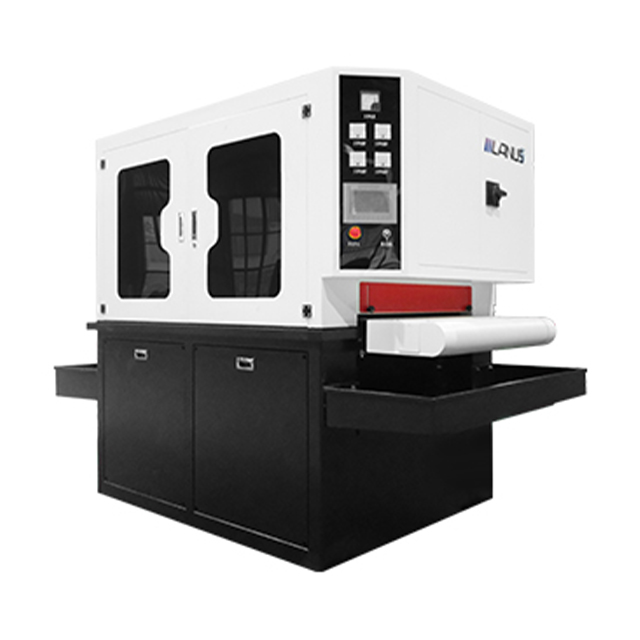
Choosing the right architecture dictates your final part quality. You must match the machine style to your specific manufacturing applications. We classify these systems into four primary categories.
These machines excel at heavy slag removal. They also provide straight-line surface graining on flat sheet metal parts. The mechanism uses wide abrasive belts tensioned over rotating contact rollers. Parts feed continuously on a high-friction conveyor belt. However, they have specific limitations. They only process parts in one directional plane. They cannot perform uniform edge rounding on complex contours or internal holes.
A rotary brush metal deburring machine handles uniform edge rounding perfectly. It excels at oxide layer removal. It also processes parts coated in protective PVC films without damaging the surface. The mechanism utilizes multi-directional spinning abrasive brushes. These brushes hit all edges of a part from 360 degrees. This provides massive advantages. It proves ideal for intricate geometries and varied part sizes fed simultaneously on a conveyor.
This category suits small, complex, or 3D machined parts. Manufacturers process these components in high-volume batches. The mechanism involves submerging parts in a large tub. This tub contains ceramic or plastic abrasive media. Motors vibrate or spin the tub rapidly. The constant tumbling action smooths every surface simultaneously. It easily reaches blind holes and internal channels.
Some operations handle high-value precision components. Medical implants and aerospace brackets fall into this category. Here, deburring occurs in-line right after the machining process. The mechanism relies on programmed tool paths. CNC machines use specialized deburring bits. Alternatively, automated robotic arms hold the part against stationary abrasive belts. This guarantees exact tolerances for highly regulated industries.
Here is a quick summary chart outlining the different architectures:
Machine Type | Best Application | Primary Mechanism | Key Limitation |
|---|---|---|---|
Wide Belt | Heavy slag, flat sheets | Abrasive belts over rollers | One-directional processing |
Rotary Brush | Uniform 360-degree edge rounding | Spinning multi-directional brushes | Not ideal for heavy slag |
Vibratory / Tumble | Small, 3D complex batches | Media tub vibration | Longer cycle times |
Robotic / CNC | High-value precision parts | Programmed tool paths | High initial programming cost |
Investing in automation requires clear financial justification. A reliable deburring system transforms your floor operations rapidly. It generates returns across three distinct operational pillars.
Manual grinding jobs suffer from massive turnover. Retaining skilled workers for repetitive, physically demanding tasks proves incredibly difficult. Automation shifts this dynamic immediately. You move away from relying on multiple manual grinders. Instead, you utilize a single machine operator. This operator manages high-throughput batches effortlessly. You can reallocate your skilled laborers to higher-value tasks. They can operate press brakes or handle complex robotic welding jobs.
Human error drives scrap rates up. Manual operators easily over-grind corners. They apply inconsistent pressure as they fatigue throughout a shift. Automated pressure and consistent feed speeds eliminate these variables. Every part receives the exact same abrasive contact. This consistency reduces scrap rates dramatically. It minimizes costly rework loops in your quality assurance department.
Edge quality impacts everything happening downstream. Uniform edge rounding improves paint adhesion significantly. Powder coating shrinks as it cures. It tends to pull away from sharp 90-degree corners. This exposes bare metal and causes premature edge rust. A rounded edge holds the coating uniformly. Furthermore, standardized edges improve robotic welding fit-ups. Welders spend less time bridging gaps caused by inconsistent manual grinding.
You must evaluate potential systems methodically. Rushing a purchase often leads to mismatched capabilities. Follow these distinct criteria to navigate the selection process successfully.
Material Compatibility: You must assess what materials you cut daily. Processing mild steel, stainless steel, and aluminum requires specific handling. You cannot use the same abrasive belts for all of them. Doing so causes cross-contamination. Iron particles embedded in stainless steel cause immediate rust.
Throughput vs. Footprint: Balance your required conveyor speeds against available factory floor space. Multi-head configurations process parts faster in a single pass. However, they demand a significantly larger physical footprint. They also require higher power availability. Ensure your facility handles the electrical draw safely.
Consumable Economics: Equipment operation incurs ongoing expenses. You must factor in the replacement frequency and cost of abrasive belts. Brushes wear down over time. Coolant and tumbling media need regular replenishment. Understanding these consumable schedules ensures accurate operational budgeting.
Wet vs. Dry Processing: This choice dictates your daily maintenance routine and safety protocols. We provide a detailed comparison framework below to clarify this selection.
Deciding between wet and dry environments represents a massive operational crossroad. Each method presents unique advantages and maintenance demands.
Feature | Dry Processing Machines | Wet Processing Machines |
|---|---|---|
Cooling | Minimal part cooling. Parts exit warm. | Coolant floods the zone. Prevents warping. |
Maintenance | Generally lower daily maintenance. | Requires daily coolant filtration checks. |
Safety | Requires separate, compliant dust extraction. | Water suppresses combustible dust naturally. |
Finish | Excellent for heavy grinding and graining. | Leaves parts clean but requires drying. |
Installing new equipment introduces distinct challenges. You must proactively manage specific adoption risks. This prevents workflow disruptions and major safety hazards.
Safety risks command top priority. Grinding metals produces fine particulate dust. Mixing aluminum and steel dust creates a highly explosive thermite reaction. You must strictly adhere to OSHA and NFPA compliance requirements. If you process mixed metals, you need rigorous dust collection protocols. Wet collection systems mitigate these risks effectively. Dedicated isolation valves and explosion vents remain mandatory for all dry systems.
Abrasive heads apply massive frictional force. They easily throw very small or lightweight parts off the conveyor belt. This damages the machine and endangers the operator. You must evaluate part hold-down technologies carefully. Standard magnetic tracks secure heavy carbon steel parts well. However, non-magnetic materials require a strong vacuum bed system. Assess your smallest part sizes thoroughly before finalizing a purchase.
Do not mistake automated operation for a complete "set it and forget it" process. These systems demand trained calibration. Operators must learn how to set precise pinch thicknesses. They must adjust brush depth meticulously. Monitoring abrasive wear ensures consistent tolerances across large production runs. A well-trained operator prevents excessive abrasive wear. They maximize the lifespan of your consumable tooling.
Navigating the vendor landscape requires a systematic approach. Use these practical steps to finalize your equipment shortlisting efficiently.
Never purchase a metal deburring machine based purely on a brochure. Always send your specific cut parts to the manufacturer first. Request comprehensive time-studies. Demand finish validation. Seeing your actual parts processed validates the machine capabilities. It removes all guesswork from the financial equation.
Production requirements evolve over time. Prioritize machines offering high modularity. Look for chassis designs allowing future head upgrades. You might start with a simple wide belt module today. Next year, you might need to add a rotary brush module. Buying a modular frame saves significant capital expenditure later.
A downed machine halts your entire shipping schedule. Evaluate the availability of local service technicians rigorously. Ask about their spare parts inventory. Ensure they stock replacement belts and contact rollers domestically. Rapid vendor support minimizes future downtime. It keeps your production flowing seamlessly.
A high-quality automated finishing system acts as a fundamental upgrade from manual operations. It remains critical for scaling production volumes predictably. It ensures strict compliance with modern safety standards. By shifting away from hand grinding, you unlock massive operational efficiencies. To ensure a successful implementation, follow these concise, action-oriented next steps:
Audit your current manual labor costs associated specifically with grinding and finishing.
Calculate your existing scrap rates caused by inconsistent manual edge quality.
Establish a clear financial baseline before requesting formal vendor quotes.
Identify your smallest and most complex part geometries to determine required hold-down methods.
Send test batches to manufacturers to validate cycle times and aesthetic finishes directly.
A: Yes, multi-head machines exist specifically for this purpose. They sequence a rough grinding wide belt followed directly by rotary brushes in a single pass. This layout removes heavy thermal slag first. It then immediately applies a uniform edge radius. This saves immense material handling time on the factory floor.
A: Typically, it ranges from 12 to 18 months. This depends heavily on your daily volume of parts. It also relies on the strategic reallocation of manual labor hours. When you shift manual grinders to higher-value tasks, your return on investment accelerates rapidly.
A: Aluminum and other non-ferrous metals require specific securing methods. Standard magnetic tracks fail here. You must use high-grip conveyor belts. You pair these with integrated, high-powered vacuum systems. The vacuum pulls air downward through the belt, holding lightweight parts flat against the aggressive abrasive heads.


