
Please Choose Your Language
Views: 0 Author: Site Editor Publish Time: 2026-10-12 Origin: Site
Transitioning from manual edge finishing to automated precision represents a critical threshold for scaling production. Relying on hand tools creates inconsistent results. It throttles output when market demands accelerate. You cannot expect operators to maintain exact tolerances using hand grinders for eight hours a day.
Extrusions, tubes, and complex metal profiles create specific operational bottlenecks on the shop floor. Standard flat-sheet finishing equipment cannot accommodate these complex 3D shapes. You need specialized handling to reach inner and outer contours without destroying the underlying part geometry. If you process multi-chambered aluminum extrusions or heavy-walled steel tubes, relying on generic solutions guarantees subpar results.
This article provides a practical framework for evaluating automated profile finishing solutions. We explore how well these systems align with your production cycle times, quality standards, and budget constraints. You will learn how to identify the right machinery to eliminate bottlenecks, isolate safety hazards, and standardize your edge quality across every production run.
A profile deburring machine automates the removal of sharp edges, burrs, and slag from cut tubes and extrusions, ensuring uniform part quality.
Upgrading to a dedicated metal deburring machine drastically reduces manual labor dependencies and mitigates ergonomic injuries.
Evaluation hinges on three core metrics: material throughput, changeover time between different profile shapes, and consumable lifespan.
Successful implementation requires assessing dust extraction compliance (especially for aluminum) and facility footprint limitations.
A true profile deburring machine differs fundamentally from standard flat-part processing equipment. Flat plate machines typically utilize wide abrasive belts applying downward pressure on 2D sheet metal. Conversely, profile machines must navigate the complex 3D realities of tubes, channels, angles, and custom extrusions. They attack multiple dimensions simultaneously. This equipment targets the cross-sectional geometry of a cut part, reaching into internal cavities while simultaneously softening external corners.
Manual processing introduces hidden operational penalties that compound over time. When operators rely on hand files, angle grinders, or manual wire wheels, you forfeit control over the manufacturing process. The hidden costs of hand-grinding manifest in several distinct ways:
Inconsistent Chamfers: Operator A applies a different pressure than Operator B, resulting in varying edge radii. This inconsistency creates massive fitment issues during downstream assembly or robotic welding.
Scrapped Parts: Over-grinding ruins expensive extrusions. One slip of a manual grinder can gouge a structural tube beyond repair.
Operator Fatigue: Hand-arm vibration syndrome and muscle fatigue slow down processing speeds as the shift progresses. Morning output rarely matches afternoon output.
High Labor Costs: Paying skilled fabricators or machinists to perform mundane edge finishing wastes expensive human capital.
Adopting dedicated automation transforms edge finishing into a highly predictable, measurable production step. You program specific feed rates, brush RPMs, and pressure settings. The machine delivers the exact same edge profile on the first part as it does on the thousandth. By removing the human variable, manufacturers achieve statistical process control over an historically chaotic workflow.
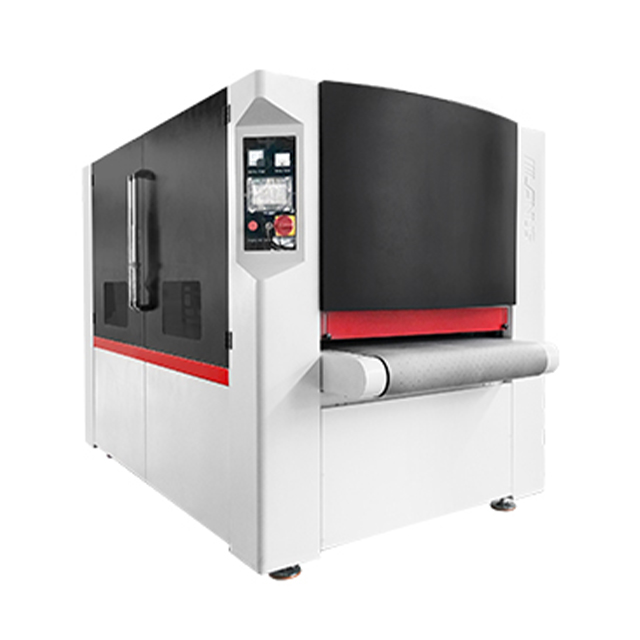
Selecting the correct mechanism requires aligning the abrasive technology with your specific profile geometry. Manufacturers engineer different mechanical approaches to address distinct types of burrs and edge conditions.
Rotary brush systems deploy cylindrical brushes filled with wire or abrasive-impregnated nylon filaments. They spin rapidly while sweeping across the cut face of the profile. We consider these systems best for complex geometries. They excel at rounding internal and external edges simultaneously. The flexible filaments conform to multi-chambered extrusions, entering small gaps where rigid tools cannot reach.
However, rotary brushes have limitations. They lack the aggressive cutting power needed for heavy slag removal. If your profiles feature thick, work-hardened dross from plasma cutting, brushes will merely polish the burr rather than remove it. They serve best for secondary burrs generated by cold saws or band saws.
Abrasive belt and disc setups utilize rigid cutting surfaces to shear off material. They are best for heavy burr removal, straight external edges, and high-volume pass-through processing. When processing thick structural steel sections, a heavy-grit belt easily powers through dense slag.
Their primary limitation lies in internal geometry. Belts and large discs cannot easily reach into the inner diameter of a pipe or the internal webs of an extrusion. You typically need specialized attachments or secondary brush stages to address those internal features.
The method of material presentation heavily dictates machine architecture. We categorize these into two primary workflows:
End-Finishing: This utilizes stationary clamping. The operator or loader secures the tube, and the abrasive tool advances toward the stationary tube end. It proves ideal for precise chamfering, facing, and squaring. It guarantees concentricity on round tubes.
Pass-Through: These continuous feeding systems propel the material through the machine using conveyor belts or pinch rollers. They are ideal for high-volume, straight-line extrusions requiring continuous edge softening along their entire length.
Here is a quick reference table summarizing these core technologies:
Technology Type | Ideal Application | Primary Limitation |
|---|---|---|
Rotary Brush | Complex extrusions, simultaneous ID/OD edges | Cannot remove heavy thermal slag |
Abrasive Belt | Heavy structural steel, straight external edges | Struggles with internal tube diameters |
End-Finishing | Precise chamfering, stationary round tubes | Slower cycle times per piece |
Pass-Through | Continuous feeding, high-volume batches | Less precision on end-face squaring |
Capital equipment purchases require clear justification beyond simply making parts look better. Integrating a dedicated metal deburring machine fundamentally alters shop floor economics and risk profiles.
Labor reallocation provides immediate operational relief. Manufacturing faces a historic shortage of skilled labor. Forcing certified welders or experienced CNC machinists to manually file tube ends represents a severe misallocation of talent. Automation allows you to move these skilled operators away from monotonous grinding. You can reassign them to high-value tasks that directly generate revenue. Less skilled operators can easily load and unload an automated finishing system, immediately increasing overall facility productivity.
Quality consistency enables zero defect manufacturing. Modern assembly relies on precision. If you utilize automated welding cells or robotic assembly, joint fitment must remain flawless. A standardized edge radius ensures optimal weld penetration and prevents weak joints. It eliminates the variations that cause automated sensors to fault or reject parts. Consistent edges also improve powder coating adhesion, as paint naturally pulls away from razor-sharp corners, leading to premature corrosion.
Safety and compliance risk reduction cannot be overstated. Hand grinding generates immense liability. Repetitive strain injuries (RSI), white finger syndrome, and lacerations frequently plague manual finishing departments. An automated machine isolates operator hands from spinning abrasives and sharp metal slivers. Furthermore, fully enclosed cabinets contain sparks and noise, drastically improving ambient workplace safety and assisting in OSHA compliance.
Identifying the right equipment requires matching machine capabilities against your specific production data. Avoid purchasing based solely on maximum horsepower. Instead, evaluate platforms using these specific dimensions.
Versatility & Changeover Times: Production environments rarely run single parts continuously. You must assess how long it takes an operator to adjust the machine from a 2-inch round tube to a complex 4-inch aluminum extrusion. Quick-release brush mounts, digital height readouts, and programmable presets dramatically reduce downtime. If changeovers take thirty minutes, you lose the efficiency gained by automation.
Material Compatibility: You must distinguish between machines built for mild steel versus those calibrated for aluminum or stainless steel. Processing reactive metals like aluminum generates combustible dust. Processing stainless steel requires preventing cross-contamination from carbon steel particles, which causes immediate rust. Ensure the machine design supports dedicated media for specific materials.
Integration Capabilities: Determine how the equipment fits into your existing flow. Can you pair the machine with automated cold saws or tube lasers? Many modern pass-through systems accept signals from upstream cutting equipment, creating a seamless line. Alternatively, you may need a strictly standalone offline process. Confirm communication protocols if inline integration is your goal.
Dust Collection & Environmental Controls: Evaluate built-in or compatible extraction systems. This proves absolutely crucial for combustible dust compliance. Aluminum processing requires specialized wet dust collectors to mitigate severe explosion risks. Ensure the machine features appropriately sized extraction ports and optimal internal airflow design to pull heavy particulate away from the processing zone.
Successful deployment requires looking beyond the initial capital expenditure. Facility managers must plan for ongoing operational realities to maintain peak efficiency.
Consumables forecasting dictates long-term viability. Abrasives degrade. Wire brushes, nylon filaments, and sanding belts require regular replacement. Buyers must calculate the cost-per-part rather than focusing solely on machine hardware costs. Aggressive burrs wear down media faster, increasing your hourly operating rate. You should request consumable lifespan estimates based on your exact material.
Below is a sample consumable tracking chart to help conceptualize replacement cycles based on typical medium-volume production (for illustrative purposes):
Consumable Item | Average Lifespan (Run Hours) | Primary Wear Factor | Action Required |
|---|---|---|---|
Abrasive Belts | 40 - 80 Hours | Heavy slag, thermal dross | Replace when grit smooths out |
Wire Brushes | 150 - 300 Hours | Part sharpness, excessive pressure | Reverse rotation daily to sharpen wire |
Nylon Abrasive Discs | 200 - 400 Hours | Extrusion complexity | Adjust machine height as bristles shorten |
Footprint and workflow planning often surprise new adopters. You must factor in the physical space required for long profile handling. A machine chassis might only measure four feet in length, but if you process twenty-foot extrusions, you need twenty feet of infeed roller tables and twenty feet of outfeed tables. Failure to plan for this footprint creates terrible logistical bottlenecks on the shop floor.
Operator training addresses the final adoption risk. While automation removes hand grinding, operators still face a learning curve. They must learn to tune abrasive pressure, adjust feed rates, and monitor amp draw. Setting the pressure too high causes premature brush wear and part distortion. Setting it too low leaves sharp edges. Standard operating procedures and manufacturer-provided training bridge this gap quickly.
Integrating a profile deburring machine into your workflow represents a strategic shift toward predictable throughput and comprehensive operator safety. It removes the largest variable from edge finishing: human fatigue. By standardizing the physical geometry of your parts, you eliminate downstream bottlenecks in welding, coating, and assembly.
When shortlisting equipment, prioritize machines based on your most difficult, high-volume profile geometry. A system that easily handles your worst-case extrusion will effortlessly process your simpler tubes. Do not buy capacity you will never use, but avoid under-powering your finishing department.
As a next-step action, request a proof of concept sample run from manufacturers. Send them your facility's actual cut profiles. Demand to see the finished edge quality and ask for the exact cycle times achieved during the test. Only request formal quotes after verifying the machine successfully handles your specific material.
A: Yes, specific rotary brush systems are designed to sweep across both ID and OD simultaneously. Flexible filaments enter the inner cavity while striking the outer rim. However, exact capabilities depend heavily on the tube diameter and the specific brush density chosen.
A: Lifespan varies wildly based on material hardness, burr thickness, and throughput volume. Abrasive belts may last 40 to 80 hours on heavy steel slag, while nylon brushes can exceed 300 hours on aluminum extrusions. Always ask vendors for average run-hour data based on your specific application.
A: Mixing ferrous and reactive metal dust creates severe fire and explosion risks, known as a thermite reaction. You must stress the need for either dedicated machines for each material type or utilize specialized wet-dust extraction alongside rigorous, deep-cleaning protocols between material changeovers.


