
Views: 0 Author: Site Editor Publish Time: 2026-10-09 Origin: Site
Metal fabrication environments constantly battle sharp edges and stubborn slag. Inconsistent manual edge finishing frequently leads to severe part rejection, hidden safety hazards, and frustrating assembly bottlenecks on the shop floor. You need a highly systematic method to remove burrs left by heavy machining, laser cutting, or high-speed stamping processes. A reliable deburring machine strips away these unwanted protrusions without compromising the essential dimensional integrity of your manufactured parts.
Understanding the exact mechanical principles behind different deburring technologies proves absolutely critical for evaluating true operational capability. We will explore how to forecast ongoing consumable costs accurately and mitigate implementation risks. You will also learn how to perfectly match the right finishing equipment to your specific production tolerances. Making an informed procurement decision requires looking beyond basic capital costs to understand the daily mechanics of surface finishing.
The core mechanism of any deburring machine relies on controlled material removal—balancing abrasive force against part geometry to ensure consistent edge quality.
Selecting a metal deburring machine requires evaluating specific operating principles (vibratory, rotary brush, thermal, or electrochemical) against your material type and production volume.
Transitioning to automated deburring is rarely just a capital purchase; it requires recalibrating workflow, assessing dust extraction needs, and calculating long-term abrasive consumable costs.
The most common implementation failure is over-specifying a machine for complex geometries while underestimating the ongoing maintenance of the media or brushes.
Mechanical finishing relies heavily on continuous, strictly regulated friction. Unlike unpredictable manual grinding, automated machines distribute physical force evenly across a targeted surface area. This consistent pressure application actively prevents surface gouging. The equipment systematically wears down protruding material using carefully calibrated kinetic energy. Abrasive grains impact the metal surface repeatedly. They shear off microscopic fragments until the edge becomes perfectly smooth. Operators dictate the aggression level through programmable pressure settings.
Different abrasive media interact uniquely against raw part edges. Sanding belts, rotating wire brushes, and ceramic stones all behave differently. Physics dictates how these abrasives remove localized material without damaging the whole component. Abrasive grains fracture during use, constantly exposing fresh cutting edges. Proper machine calibration determines your ultimate physical outcome. You can configure the equipment for simple slag removal, deep edge rounding, or high-end aesthetic surface finishing. They adapt to varying production requirements seamlessly when operators understand the underlying mechanics.
Industrial machines incorporate critical mechanical safeguards. These protective features defend the primary flat surface of your part. They exclusively target unwanted corner protrusions and microscopic burrs. Precision sensors monitor thickness variations continually. Rigid hold-down rollers keep flat parts stable during heavy processing. Contact drums utilize specific rubber durometers to yield over flat areas while aggressively hitting sharp corners. You retain tight manufacturing micro-tolerances while completely eliminating dangerous sharp edges from the workflow.
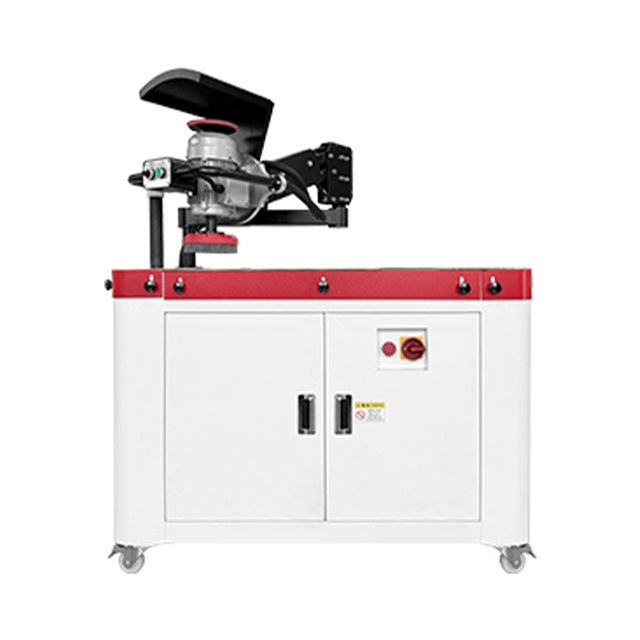
Manufacturers utilize counter-rotating abrasive brushes or spinning discs for planar finishing. Parts travel securely underneath the abrasive heads on a high-friction continuous conveyor system. This mechanical approach works exceptionally well for flat sheet metal profiles. You can process complex laser-cut parts rapidly. The multi-directional brushing action hits edges from every possible angle. They excel at achieving uniform, perfectly radiused edge rounding across wide exterior surfaces. You often see these machines integrated directly behind fiber laser cutting centers.
These units utilize a large urethane-lined tub or circular bowl. You fill this chamber using specialized abrasive media, water, chemical compounds, and raw parts. High-frequency eccentric weights create an intense, continuous scrubbing action. The ceramic or plastic media rubs aggressively against every exposed metal surface. This process remains the definitive industry standard for high-volume, small-to-medium parts. It offers highly cost-effective mass finishing for stamped fasteners and cast components. However, it completely lacks precision targeting for isolated or specific external edges.
Heavy plasma dross requires aggressive, high-horsepower mechanical action. These robust machines employ wide, continuous abrasive belts running under extreme tension. They aggressively grind down thick, hardened dross in a single pass. You absolutely need this abrasive technology for thick steel plates cut by plasma torches or oxy-fuel flames. Careful heat management remains necessary during this process. Excessive grinding pressure can generate enough thermal energy to warp thinner sheet metal components permanently.
Certain critical applications require highly specialized, non-traditional methods. Thermal machines use precisely timed combustible gas flashes to incinerate thin burrs instantly. Electrochemical systems rely on focused anodic dissolution to melt away microscopic imperfections. Both advanced techniques remove internal burrs effectively. Engineers reserve these expensive methods for highly complex internal geometries. They work perfectly on intricate aerospace manifolds or hydraulic blocks where mechanical abrasive media simply cannot reach.
Machine Type |
Core Operating Principle |
Ideal Part Geometry |
Primary Application |
|---|---|---|---|
Rotary Brush/Disc |
Counter-rotating multidirectional abrasives |
Flat, 2D sheet metal profiles |
Uniform edge rounding, oxide removal |
Vibratory Bowl |
High-frequency mass scrubbing |
Small 3D parts, castings, fasteners |
High-volume batch deburring |
Abrasive Belt |
High-tension linear grinding |
Thick, heavy steel plates |
Aggressive dross and slag removal |
Thermal/Electrochemical |
Gas ignition / Anodic dissolution |
Complex internal channels, valves |
Micro-burr removal in blind holes |
Evaluating automated equipment requires matching specific mechanical capabilities directly to your production needs. First, carefully assess your primary part geometry. Flat sheet metal parts strongly favor conveyor-fed rotary brush systems. Complex or three-dimensional structural components generally require vibratory bowls or articulated robotic solutions. Material compatibility also heavily drives equipment selection. Processing soft aluminum requires entirely different abrasive grain loading than hard stainless steel. Aluminum also demands stringent, highly specialized fire mitigation strategies to operate safely.
You must compare throughput expectations against realistic cycle times. Continuous-feed belt systems process flat parts rapidly in a sequential line. They integrate well into continuous workflow environments. Conversely, batch-processing vibratory bowls take much longer per cycle but handle hundreds of small items simultaneously. You must calculate mathematically how these drastically different cadences impact your upstream and downstream flow. A fast laser cutter easily overwhelms a slow finishing department if you do not balance the cycle times correctly.
Finally, clearly define your technical success criteria for edge quality. What exactly does your internal compliance standard dictate? You must identify precise mechanical requirements before purchasing equipment. Setting clear, measurable parameters prevents expensive over-engineering.
Does the part require a highly specific, measurable radius verified by calipers?
Is a mandatory 2mm edge rounding required for proper long-term paint adhesion?
Do you merely need a basic "safe to handle" edge to protect manual assembly workers?
Does the edge require complete oxide layer removal alongside the mechanical radiusing?
Moving away from manual hand-grinding changes your operational model significantly. Automated systems still absolutely require human intervention daily. You must allocate reliable operators for loading parts and performing strict quality assurance. Personnel also handle routine abrasive consumable changes. However, these operational tasks require a much lower skill tier compared to expert manual grinders. You can confidently reallocate your highly skilled fabrication workers to more complex, profitable tasks like welding or CNC programming.
Evaluate ongoing operational expenses carefully. Rotary brushes, continuous abrasive belts, and ceramic tumbling media degrade predictably over time. Their inevitable replacement forms a major recurring operational expense. A surprisingly cheap metal deburring machine often masks much higher long-term consumable replacement rates. Soft rubber contact rollers also wear down and require periodic redressing. You must forecast these exact attrition rates based on your specific material hardness and daily production volume.
Industrial equipment requires substantial facility infrastructure to function properly. High amperage draws from multiple large drive motors increase facility energy consumption significantly. You must provide adequate electrical drops to handle peak starting currents. You must also account for integrated wet or dry filtration units. These auxiliary environmental units pull heavy electrical power continuously during operation. Additionally, pneumatic tensioning systems require a constant, clean supply of compressed shop air.
Shop floor implementation presents several serious practical challenges. You must address facility safety and routine maintenance proactively. Dust extraction requires rigorous adherence to combustible dust compliance protocols. Mixing different metallic materials creates severe explosion risks. Processing steel and aluminum sequentially in dry environments generates a highly combustible thermite-like dust mixture. You must implement fully compliant wet scrubbers to drown the sparks. Alternatively, you must install dedicated, material-specific dry dust collectors with explosion isolation valves.
Fabricators frequently face the complex "wet versus dry" processing dilemma. Each engineering approach carries distinct operational trade-offs that impact daily workflow.
Wet machines: They extend abrasive belt life significantly by providing continuous cooling. They completely eliminate combustible dust explosion risks. However, they require complex coolant fluid management, rust inhibitor dosing, and secondary part drying processes.
Dry machines: They offer a noticeably smaller physical floor footprint. Processed parts emerge immediately ready for the next manufacturing phase. Conversely, they experience higher abrasive heat wear and demand much stricter, expensive dust mitigation infrastructure.
Operational Factor |
Wet Processing Environment |
Dry Processing Environment |
|---|---|---|
Abrasive Lifespan |
Extended (coolant reduces heat/friction) |
Standard (higher thermal degradation) |
Combustible Dust Risk |
Eliminated (dust is trapped in fluid) |
High (requires NFPA-compliant extraction) |
Post-Processing Needs |
Requires drying and rust inhibitors |
Parts are immediately ready for routing |
Maintenance Complexity |
High (coolant filtration and sludge removal) |
Moderate (filter changes and bin emptying) |
Vibratory mass finishing systems introduce highly unique maintenance challenges. Ceramic tumbling media frequently becomes stubbornly lodged in blind holes or tight part crevices. This unfortunate lodging requires tedious secondary manual intervention to clear the blockage. Operators waste hours picking stones out of threaded holes. You must size your abrasive media perfectly during the initial pilot testing phase. Selecting a media shape larger than your largest hole prevents this frustrating lodging risk entirely.
Understanding exactly how the deburring machine works forms the critical baseline for making a defensible, long-term procurement decision. You must evaluate internal mechanical principles, part geometry, and facility safety infrastructure cohesively. Neglecting any of these interconnected elements leads to operational inefficiencies and safety hazards.
To move forward successfully, streamline your approach immediately. Shortlist equipment vendors based primarily on your typical sheet metal or machined part geometry. Always demand a thorough "proof of concept" sample run using your actual production parts. Use this physical test to verify precise cycle times and actual consumable wear rates. Review these practical results meticulously before finalizing any purchase order.
A: Consumable lifespan varies significantly based on overlapping production factors. Material hardness directly impacts degradation rates. Processing hardened steel wears out abrasive belts much faster than soft aluminum. The initial burr size also dictates how aggressively the machine must work. Furthermore, heavy pressure calibration reduces lifespan compared to light surface finishing. Operators must monitor physical wear closely to maintain consistent edge quality.
A: Yes, but it requires extreme caution regarding combustible dust hazards. Mixing aluminum and steel dust creates a highly explosive mixture. If using a dry system, you must clean the entire machine enclosure and dust collector thoroughly between material changeovers. Most safety experts strongly recommend using wet filtration systems to neutralize these severe cross-contamination explosion risks entirely.
A: Deburring specifically removes unwanted excess material, such as sharp flakes, heavy slag, or dross left by cutting tools. It merely cleans the edge profile. Edge rounding goes a crucial step further. It intentionally creates a specified, smooth radius on the sharp corner of the part. This deliberate radiusing ensures worker safety and creates an optimal surface for long-term paint adhesion.
A: No, vibratory mass finishing protects core part dimensions when calibrated correctly. Engineers carefully select specific media shapes to target only protruding sharp edges. The abrasive media glides over flat machined surfaces without exerting enough concentrated kinetic force to alter tight micro-tolerances. Controlling the exact processing cycle time ensures burrs disappear while primary dimensional specifications remain completely intact.


