
Please Choose Your Language
Views: 0 Author: Site Editor Publish Time: 2026-09-03 Origin: Site
Raw metal fabrication rarely yields a perfectly finished product right off the cutting table. Heavy industrial processes like laser, plasma, and punch cutting always leave behind microscopic splinters, sharp edges, and molten residue. A deburring machine mechanically transforms these raw, post-cut parts into safe, spec-compliant components. Without automation, this operational bottleneck severely hampers growth. Manual edge cleaning introduces alarming inconsistencies across batches. It drastically inflates labor costs and causes persistent production delays. Manufacturers cannot scale effectively using handheld grinders. We will detail the exact technical capabilities of automated surface finishing equipment to solve these hurdles. You will discover the primary machine categories available today to upgrade your floor. We will also provide a robust evaluation framework for your next capital equipment investment.
Core Functionality: Modern machines go beyond basic edge cleaning; they perform edge rounding, oxide layer removal, and surface finishing simultaneously.
ROI Drivers: Upgrading to an automated machine reduces labor dependency, ensures uniform part quality, and drastically lowers cycle times.
Selection Criteria: Evaluating a machine requires analyzing part geometries, material types, throughput volume, and abrasive media costs.
Implementation Reality: Proper adoption requires planning for consumable usage, operator training, and strict compliance with dust collection and safety regulations.
Modern automated equipment goes far beyond simple friction applications. They execute multiple complex surface conditioning tasks simultaneously to elevate part quality.
Cutting operations generate localized heat. This heat melts the metal, leaving behind hard droplets called dross or slag. Punch presses create raised vertical lips known as primary burrs. Mechanically removing these hazards requires heavy abrasive action. Automated systems use hard contact rollers combined with abrasive belts. They shear off vertical and horizontal burrs aggressively. They grind down the slag flush against the core material. This initial step flattens the part profile perfectly. It prepares the metal for subsequent secondary processing without risking operator injury during handling.
Removing the primary burr leaves a perfectly sharp 90-degree corner. Sharp corners pose major problems for paint and powder coating. Liquid coatings naturally pull away from sharp edges during curing. This exposes the underlying metal to rapid rust and corrosion. Equipment operators calibrate the machine to apply a precise radius to these edges. A common specification demands a 2mm edge radius. Achieving this requires specialized abrasive blocks or brushes. They sweep across the edges uniformly. Softening the corner ensures superior coating adhesion and safer manual assembly downstream.
Oxygen-assisted laser cutting introduces a unique chemical problem. The intense heat reacts directly with the oxygen gas. This creates a dark, hard oxide layer along the cut edge. Paint easily adheres to this oxide scale. However, the scale itself flakes off the core steel easily over time. If you do not remove it, coating delamination occurs inevitably. Specialized rotary wire brushes strip away this stubborn layer. They dig into the cut edge aggressively. This reveals the clean, bare metal underneath. Bare metal guarantees permanent paint adhesion.
Many manufacturers require a specific cosmetic appearance. A machine can apply a uniform directional finish across the entire surface. Wide abrasive belts grain the metal to standard specifications, such as a #4 brushed finish. Different grit sizes dictate the final cosmetic look. Fine non-woven abrasive fleece can polish out minor surface scratches. Doing this while simultaneously processing the edges saves immense time. It eliminates the need for a separate cosmetic finishing department.
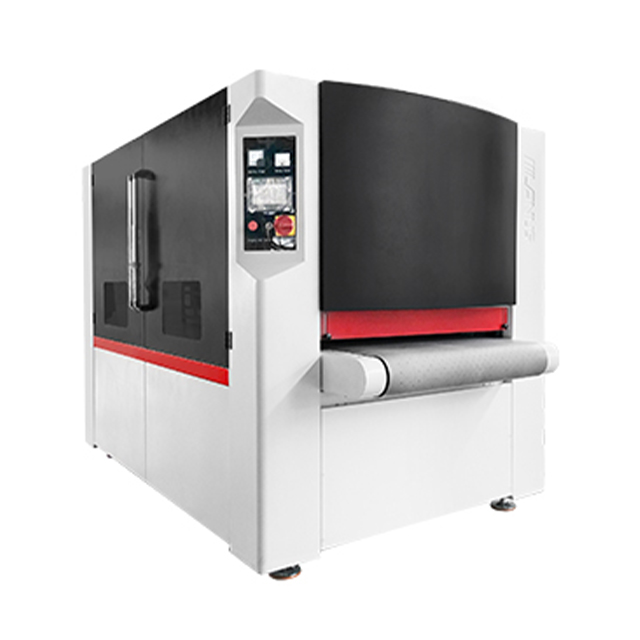
Transitioning from hand tools to an automated system requires significant capital. However, the operational benefits justify the expenditure quickly. We must examine the core business drivers behind this upgrade.
Evaluation Metric | Manual Hand Grinding | Automated Processing |
|---|---|---|
Quality & Consistency | Highly variable; depends entirely on operator fatigue and skill level. | Perfectly uniform tolerances across thousands of identical parts. |
Cycle Times | Can take several minutes per moderately complex part. | Processes multiple parts in a single pass taking seconds. |
Labor Allocation | Ties up workers in low-value, repetitive tasks. | Frees skilled workers for welding, CNC operation, or assembly. |
Safety Risks | High risk of repetitive strain injuries and localized dust inhalation. | Enclosed systems eliminate hand injuries and capture hazardous dust. |
Automated machines eliminate the variance inherent in human operators. Using hand grinders introduces human error naturally. Operators apply different pressures depending on fatigue. They might over-grind one corner and under-grind another. Automated systems follow precise mechanical calibrations. They ensure every part meets exact tolerances repeatedly. This consistency drastically reduces your rejected part rates.
Production bottlenecks usually form right after the cutting stage. Multi-head machines eliminate this backlog instantly. They can process parts in a single pass in seconds. A conveyor system feeds parts continuously. This replaces hours of manual grinding on high-volume runs. Your overall factory throughput increases dramatically.
Skilled labor remains incredibly scarce. Paying a trained welder to grind edges wastes valuable resources. Automation reallocates your skilled labor to higher-value tasks. Furthermore, hand grinding causes severe repetitive strain injuries. It exposes workers to dangerous sparks and localized particulate matter. Enclosed systems mitigate these safety liabilities entirely.
Capital expenditure for a multi-head unit is high initially. However, the cost per part drops significantly at volume. Reduced labor hours drive this cost reduction primarily. Fewer rejected parts save expensive raw material. You process more orders using the same floor space. The return on investment typically realizes within one to two years.
You cannot buy a universal solution. Engineers design different systems for highly specific part geometries and production volumes. Selecting the right metal deburring machine requires understanding these core configurations.
Wide Belt / Flat Part Machines: These dominate sheet metal fabrication shops. They work best for laser-cut, plasma-cut, or stamped flat parts. They utilize abrasive belts, rotary brushes, or oscillating discs in a horizontal conveyor setup. Parts feed in one side and exit fully finished on the other. They handle extreme volumes efficiently.
Vibratory / Tumbling Deburring: These machines serve completely different geometry needs. They work best for small, complex, or bulk-machined parts. The system submerges batches of parts in a large tub filled with abrasive ceramic or plastic media. The tub vibrates rapidly. This softly abrades all surfaces simultaneously. It reaches internal geometries and blind holes perfectly.
Robotic / CNC-Integrated Deburring: Large castings and complex 3D geometries require robotic intervention. These systems use programmed robotic arms. The arms wield specific high-speed abrasive tooling. They follow exact CAD paths to apply high-precision edge control. They suit the aerospace and automotive sectors perfectly.
Rotary Brush / Edge Profilers: These dedicated units focus entirely on edges. They specifically design them for heavy edge rounding and oxide removal. They utilize planetary brush heads rotating at high speeds. Crucially, they process edges without altering the surface thickness of the core material. They are vital for coated materials or parts requiring strict thickness tolerances.
Purchasing the wrong system creates massive production headaches. You must evaluate your specific operational realities against machine specifications. Use these critical dimensions to guide your selection process.
Assess exactly which metals you process daily. Aluminum, stainless steel, and carbon steel behave very differently under abrasive belts. Stainless steel requires specific abrasive grains to avoid heat warping. More importantly, mixing certain metals creates extreme hazards. Running aluminum and carbon steel through the same dry machine creates a dangerous thermite reaction risk. The sparks from steel ignite the combustible aluminum dust violently. You must designate dedicated machines or purchase wet-type systems if mixing metals frequently.
Machine dimensions dictate your maximum and minimum part sizes. Conveyor widths strictly limit maximum flat part processing. If you cut parts measuring 50 inches wide, a 36-inch machine fails your needs entirely. Conversely, consider the minimum part size closely. Very small components easily slip through the gaps in standard conveyor belts. They fall inside the machine casing. To process tiny parts, you need a machine equipped with a vacuum conveyor bed or a strong magnetic track.
Determine your exact finish requirements. Do you simply need to knock off sharp slag? Or do you need a polished, rounded edge ready for powder coating? Determine if you need an all-in-one configuration. A multi-head machine can grind the burr, round the edge, and apply a surface finish in one single pass. This saves massive floor space. Alternatively, you might only need a dedicated single-task unit. Single-head machines cost less upfront but require manual intervention for secondary processes.
Integrating heavy finishing equipment disrupts your factory floor layout. Proper adoption requires planning for consumable usage and strict safety compliance. You must prepare your facility adequately before the machine arrives.
Abrasive processing generates immense amounts of hazardous particulate matter. Wet and dry machines require specialized, highly regulated dust extraction systems. If you process aluminum or titanium, you must follow strict National Fire Protection Association (NFPA) guidelines. Explosive metal dust requires specialized wet downdraft tables or exterior dust collectors equipped with explosion isolation valves. Failing to comply invites severe regulatory fines and poses a lethal risk to your operators.
You must choose between wet and dry operating formats. Dry machines are generally cheaper upfront. They remain easier to maintain mechanically. However, they pose significantly higher ambient dust risks to the facility. Wet machines eliminate airborne dust completely. They use coolant to flood the abrasive area. This cools the parts and extends belt life. However, wet systems require constant coolant filtration maintenance. You must also manage strict environmental compliance regarding wet sludge disposal.
Do not assume automated equipment runs itself. Modern systems require operators to understand complex machine variables. Operators must select the correct abrasive grit for the metal type. They must calibrate the pressure heads perfectly down to the millimeter. They need to adjust conveyor feed speeds based on the burr thickness. Poorly trained operators easily over-machine parts. They destroy tight tolerances quickly or burn through expensive abrasive belts in hours.
Assess the actual floor space required thoroughly. The machine chassis represents only a fraction of the necessary footprint. You must allocate space for large in-feed and out-feed material handling tables. You need clearance for forklift access to load heavy pallets. You must dedicate external space for the massive dust collection units and ductwork. Workflow integration requires mapping the physical route parts take from the laser cutter to the finishing system.
A deburring machine acts as the critical transitional step between raw fabrication and final assembly.
Automating this process drastically reduces labor costs, eliminates safety hazards, and ensures uniform part tolerances.
The right machine choice balances part geometry, desired cosmetic finish, and expected production volume.
Facility readiness requires strict adherence to dust extraction standards and dedicated operator training.
Next Step Action: Compile a batch of your most difficult, "worst-case" raw parts. Request a time-studied sample run from top equipment manufacturers before shortlisting any specific brand.
A: If calibrated incorrectly, yes. Abrasive belts applying too much pressure can thin out sheet metal beyond acceptable tolerances. However, machines using specific rotary brushes are designed to target edges only. They sweep across the material laterally, leaving the core surface thickness completely untouched.
A: Deburring specifically removes the raised, sharp lip (the burr) left behind by cutting processes. It flattens the edge. Edge rounding is a secondary process. It takes that newly cleaned 90-degree corner and softly grinds it to a specific radius, ensuring maximum safety and optimal paint adhesion.
A: Most industrial machines accept standard abrasive belt sizes manufactured by third-party tooling companies. You can source them widely. However, highly specialized rotary brushes or custom edge-rounding blocks may be proprietary to the specific machine brand you purchase.


