
Please Choose Your Language
Views: 0 Author: Site Editor Publish Time: 2026-09-04 Origin: Site
Manual finishing processes often cripple modern manufacturing lines. Relying on hand grinders or abrasive files slows down production schedules. It also introduces severe inconsistencies across your part batches. Manual deburring creates operational bottlenecks, unpredictable part quality, and elevated scrap rates. The stakes for automating this process are incredibly high. Choosing the wrong automated system results in damaged components and excessive consumable waste. It can also introduce severe compliance liabilities. Combustible metal dust accumulation alone poses massive safety risks if facility managers ignore it. This article provides a vendor-neutral, facility-first framework for evaluating and shortlisting automated solutions. You will learn how to precisely match equipment to your daily production volume, strict precision standards, and critical safety requirements. Read on to understand the machine types available, key evaluation criteria, and implementation realities before finalizing your capital investment.
Auditing your part geometry, material mix, and throughput is the mandatory first step before comparing machine specifications.
Selecting between wet and dry systems, or feed-through versus vibratory tumbling, depends heavily on surface finish requirements and combustible dust risks.
Never finalize a capital purchase without requiring the manufacturer to process your actual sample parts as a proof of concept.
Selecting the ideal deburring machine starts on your shop floor. You must audit your current parts before reviewing equipment brochures. Material types, part shapes, and production volumes dictate the correct technology. A mismatch here leads to severe operational headaches later.
Different metals behave uniquely during abrasive processing. Carbon steel generates heavy sparks when ground. Aluminum creates highly explosive dust. Processing titanium requires specific speed controls to prevent heat buildup. You must clearly define your material mix. Cross-contamination presents a massive hazard. Processing aluminum and steel in the same dry machine can ignite a deadly fire. You need strict cleaning protocols or dedicated machines if you handle mixed metals.
The physical shape of your components narrows your equipment choices immediately. Flat sheet metal thrives in feed-through conveyor systems. These machines handle large panels efficiently. Conversely, complex 3D machined blocks or extruded profiles require different handling. You cannot run a deeply pocketed aerospace bracket through a flat belt sander. Identify your primary part geometries. Measure your typical material thicknesses. Thin gauge materials warp easily under heavy abrasive pressure or heat.
Production environments usually fall into two categories. You either run high-volume, low-mix operations or high-mix, low-volume job shops. High-volume lines demand continuous feed speeds. They require automation to keep up. High-mix shops prioritize flexibility. You might process heavy steel plates in the morning and thin aluminum sheets in the afternoon. This requires frequent abrasive changeovers. You must evaluate whether raw speed or quick adaptability brings more value to your line.
How you cut your parts determines the burr severity. Every cutting method leaves a distinct signature. You must match your finishing equipment to the specific defect.
Laser Cutting: Leaves hard, localized dross and sharp edges. Requires moderate abrasive power to remove.
Plasma Cutting: Generates thick, heavy slag. Often requires aggressive grinding belts or hammer-style removal tools.
Waterjet Cutting: Leaves cleaner edges but creates sharp micro-burrs. Requires finer abrasive media to smooth.
CNC Machining: Produces distinct tooling marks and edge burrs. Often requires precise radiusing rather than aggressive grinding.
Chart: Upstream Process vs. Burr Profile
Cutting Method | Burr/Defect Type | Removal Difficulty | Recommended Action |
|---|---|---|---|
Fiber Laser | Hardened dross, sharp edges | Medium | Rotary brushes or flexible belts |
Plasma | Heavy slag, thermal distortion | High | Aggressive wide belt grinding |
Waterjet | Micro-burrs, sharp corners | Low | Fine abrasive pads or tumbling |
CNC Milling | Machining marks, edge burrs | Variable | Precision radiusing tools |
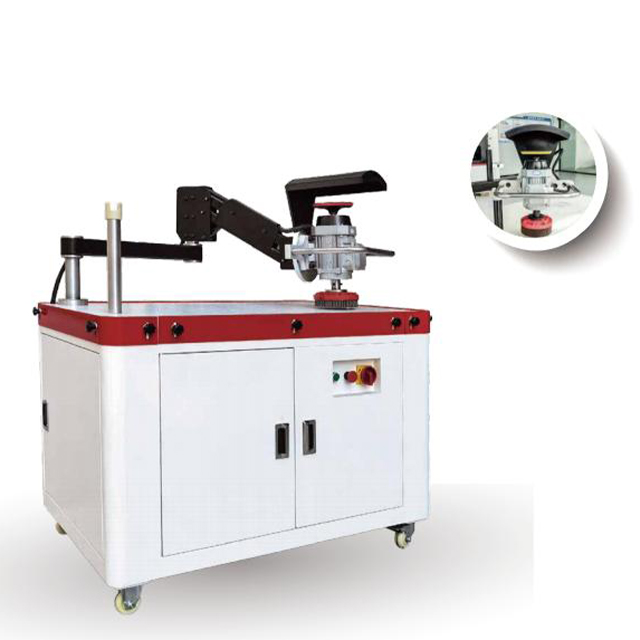
The market offers several distinct technological approaches. Each system solves specific finishing problems. Understanding these core types prevents costly misapplications.
These systems dominate the flat sheet metal industry. Parts travel along a conveyor belt under rotating abrasive heads. Wide belts aggressively grind away vertical burrs and heavy slag. Rotary brushes then sweep across the part. The brushes soften the edges and create a uniform radius. This combination perfectly prepares parts for powder coating or safe handling. They work exceptionally well for laser-cut or punched flat components.
Mass finishing relies on friction. Operators load parts into a large bowl or tub filled with abrasive ceramic or plastic media. The machine vibrates rapidly. The media scrubs against the parts, smoothing edges over time.
Tumblers excel at processing small, complex 3D parts in bulk. They reach into internal pockets and cross-holes easily. However, tumbling is a slow process. It can take hours to finish a batch. Feed-through machines offer rapid, continuous processing but only handle flat or mildly contoured exterior surfaces. Tumblers provide less precise control over the final edge radius compared to strict feed-through belt settings.
Choosing between wet and dry processing dictates your facility's safety infrastructure. Both have distinct advantages.
Dry Systems: These machines utilize dry abrasive belts. They maintain a smaller initial footprint on the shop floor. However, they mandate robust, NFPA-compliant dust collection systems to capture dangerous particulates.
Wet Systems: These machines spray coolant onto the parts during processing. The liquid prevents heat distortion on thin materials. More importantly, it instantly suppresses combustible dust. This eliminates fire risks when processing aluminum. Wet systems do require routine coolant filtration and heavy sludge management.
Table: Wet vs. Dry System Comparison
Feature | Dry Systems | Wet Systems |
|---|---|---|
Dust Hazard | High (Requires extraction) | None (Dust becomes sludge) |
Heat Generation | High (Risk of part warping) | Low (Coolant absorbs heat) |
Maintenance Needs | Filter changes, duct cleaning | Coolant changes, sludge removal |
Mixed Metal Safety | Dangerous (Fire risk) | Safe (Sparks suppressed) |
Some facilities require extreme precision. High-value aerospace or medical components cannot tolerate handling scratches. Robotic arms equipped with spindle tools handle these tasks. You can also integrate specialized tools directly into your CNC milling centers. In-line finishing eliminates secondary handling bottlenecks. However, cycle times increase for the primary CNC machine. Standalone robotic cells offer high consistency but require specialized programming skills.
Once you understand the basic machine types, you must evaluate specific models. Look beyond the purchase price. Focus on operational efficiency and long-term viability.
You must define exact success criteria. Simply "removing the burr" is too vague. Do you need a perfectly sharp, clean edge? Or do you need a specific edge radius for paint adhesion? Paint pulls away from sharp corners, causing premature rust. You might need a specific Ra (Roughness Average) value for sanitary food-grade applications. Communicate these exact tolerances to your vendor. Ensure the machine controls allow for micro-adjustments to hit these targets consistently.
Abrasives represent a continuous operational expense. Evaluate the cost, expected lifespan, and local availability of belts, brushes, or tumbling media. Some proprietary brushes cost significantly more than standard market alternatives. Ask vendors for realistic consumable consumption rates based on your specific materials. Aggressive slag removal shreds belts quickly. Factor these ongoing replacements into your monthly operating budget.
Downtime kills profitability. High-mix facilities must change abrasives frequently. Swapping a grinding belt for a polishing pad should take minutes, not hours. Evaluate the machine's internal access. Look for quick-release mechanisms. Measure the downtime required to swap tool heads. Faster changeovers directly boost your Overall Equipment Effectiveness (OEE). Complex calibration requirements after every tool change will frustrate your operators and slow down production.
Your business will ideally grow. Can your new metal deburring machine scale alongside your production? Look for integration capabilities. Determine if the equipment accepts return conveyors for one-operator handling. Ask if you can integrate robotic loading or unloading arms later. Some basic models operate as isolated islands. Advanced machines communicate with centralized factory software to track efficiency. Plan for your future facility needs now.
Buying industrial equipment builds a long-term relationship. You rely on the manufacturer to keep your line running. Poor vendor support translates directly into lost revenue.
Never buy a machine based solely on a glossy brochure. Demand documented test runs. Send the manufacturer a batch of your worst, most problematic parts. Ask them to process the batch and return the parts with a detailed time study. Evaluate the returned pieces carefully. Check for edge consistency. Verify the surface finish meets your exact standards. This proof of concept protects your capital investment.
Common Mistake: Sending perfectly flat, clean samples for testing. Always send warped, heavily burred parts to see how the machine truly performs under stress.
Machines break down. When they do, you need immediate help. Assess the vendor's service infrastructure. Ask about their domestic spare parts inventory. Parts shipped from overseas cause week-long delays. Review their Service Level Agreements (SLA). Determine average technician dispatch times. Many modern machines feature remote diagnostic capabilities. Factory engineers can log into your machine online to troubleshoot software issues instantly. This feature saves thousands in downtime.
Look for manufacturers with proven deployments in your specific sector. Aerospace manufacturing requires managing incredibly tight tolerances and exotic alloys. Agricultural equipment manufacturing requires removing massive plasma dross from thick steel plates. A vendor experienced in medical devices might struggle to optimize a machine for heavy structural steel. Ask for references from similar companies in your industry.
Installing heavy machinery requires facility preparation. Overlooking utilities or safety compliance leads to delayed launches and hefty regulatory fines.
Map out the physical footprint accurately. Do not just measure the machine itself. You must include space for in-feed and out-feed staging areas. Operators need room to maneuver material carts. Review the power requirements early. Ensure your electrical panels can handle the heavy amperage draw of large drive motors. Verify your compressed air volume and pressure. Pneumatic tensioning systems require clean, dry, and consistent air supply to function properly.
Safety regulations demand strict attention. The National Fire Protection Association (NFPA) explicitly regulates combustible metal dust under standard 484. Aluminum dust poses severe explosion risks. If you select a dry processing machine, ensure the dust extraction system complies fully with local regulations. It must include explosion isolation valves and proper grounding. Never cut corners on dust collection. OSHA fines for non-compliance are severe, and the physical risks to your operators are catastrophic.
Account for the human element. Transitioning from hand grinders to automated systems requires a learning curve. Your operators must learn new skills. They need proper training on feed speeds, pressure settings, and abrasive selection. A machine is only as effective as the person running it. Establish strict preventative maintenance routines immediately. Operators must know how to clean sensors, empty dust trays, and tension belts safely. Proper training ensures machine longevity and consistent part quality.
Finding the right finishing equipment bridges the gap between ambitious cycle time goals and strict quality standards. Moving away from manual grinding stabilizes your production floor. It creates a safer, cleaner, and far more predictable manufacturing environment.
To move forward effectively, follow these actionable next steps:
Identify your three most problematic part numbers based on scrap rates or manual labor hours.
Document the exact material types, starting conditions, and final finish requirements for these parts.
Initiate a dialogue with two or three vetted manufacturers.
Demand a formal sample test and time study for your problematic components.
A: Equipment pricing varies drastically based on capability. Entry-level dry belt machines for small shops start around $15,000 to $25,000. Mid-range systems with dual heads run between $40,000 and $80,000. Fully automated, multi-head wet systems designed for continuous, high-volume production often exceed $150,000. Always consider installation, freight, and necessary dust collection infrastructure when budgeting.
A: Yes, but it requires extreme caution. Mixing steel sparks with aluminum dust in a dry system creates a severe explosion hazard. To process both safely, you must either use a wet system that suppresses sparks and dust, or implement rigid, time-consuming cleaning protocols for dry machines before switching metals.
A: Deburring strictly removes the raised, sharp defects (burrs or slag) created by cutting tools. It makes the edge flush. Edge rounding goes a step further. It intentionally mills the corner to create a specified, smooth radius. This radius ensures safe handling and prevents paint or powder coating from chipping off sharp corners.
A: You can approach this two ways. You can deburr directly inside the CNC machine using specialized spindle tools, which saves part handling but increases CNC cycle times. Alternatively, you can move parts to a secondary standalone station. For high volume, a robotic arm can move parts directly from the CNC to a secondary finishing machine.


