
Please Choose Your Language
Views: 0 Author: Site Editor Publish Time: 2026-10-08 Origin: Site
Manual deburring often acts as a massive bottleneck in modern manufacturing facilities. Relying on hand tools introduces unacceptable variables in part consistency. It inflates labor costs and aggressively throttles overall production throughput. As production scales, manual finishing simply cannot keep up. Parts back up at the grinding stations, delaying subsequent assembly steps. To maintain competitiveness, you need a scalable, automated solution.
This guide demystifies the mechanical operation of automated deburring systems. We provide a rigorous framework for evaluating capital equipment upgrades. You will discover exactly what happens inside these powerful systems. We will explore different mechanisms, from vibratory bowls to robotic cells.
Understanding how the equipment operates is the critical first step. It allows you to accurately predict the machine's impact on part tolerances. You can forecast its effect on surface finish quality. By the end, you will know how to make smarter procurement decisions based on empirical testing and mechanical alignment.
A metal deburring machine relies on controlled friction, abrasion, or engineered toolpaths to remove edge burrs without altering the core geometry of the part.
Operational mechanisms vary significantly by machine type (e.g., vibratory tumbling vs. rotary brush vs. robotic actuation), dictating their ideal use cases.
Transitioning to automated deburring requires evaluating wet vs. dry systems, abrasive consumable costs, and facility compliance constraints (e.g., combustible dust).
Procurement success hinges on empirical testing (running sample parts) rather than theoretical machine specifications.
Manufacturers often struggle to recognize when manual finishing becomes a liability. The tipping point usually arrives when scrap rates begin climbing unexpectedly. Hand grinding relies entirely on human judgment. Workers fatigue over a long shift, causing inconsistent pressure application. This inconsistency severely harms facilities trying to meet tight aerospace or medical tolerances.
Labor shortages also force the issue. Finding skilled operators willing to perform tedious, hazardous grinding work is increasingly difficult. When your highly paid welders or machinists spend hours manually removing burrs, you lose valuable production capacity. You must identify these bottlenecks. They signal a desperate need for a dedicated deburring machine.
You cannot improve what you do not measure. Establishing clear success criteria ensures your new equipment actually solves your production woes. A successful machine implementation delivers highly predictable cycle times. You know exactly how many parts will exit the machine every hour.
Success also means eliminating secondary manual operations. Operators should not need to touch up parts after they exit the automated system. You should also look for a measurable reduction in abrasive waste. Automated systems optimize abrasive contact, extracting far more life from belts and brushes compared to erratic hand tools. Document your current cycle times and use them as your baseline.
Many shops hesitate due to the upfront capital expenditure of automated equipment. However, you must weigh this against the recurring, unscalable costs of manual hand-grinding operations. Manual deburring scales linearly. If you want to double your output, you must double your finishing staff.
Automated systems break this linear trap. They process batches of parts simultaneously or utilize wide conveyor belts for continuous feed. The opportunity cost of sticking to manual methods includes lost contracts, stalled growth, and excessive worker compensation claims from repetitive strain injuries. You lose the ability to bid on high-volume jobs requiring uniform edge quality.
These systems excel at processing flat components. They typically use a combination of wide abrasive belts and multi-directional spinning brushes. Often, they employ planetary heads. These heads rotate on their own axes while spinning together on a larger carousel. Parts travel beneath them on a high-friction conveyor belt.
The abrasive belt handles vertical burrs. The planetary brushes sweep across the part edges from every conceivable angle. This multi-directional action guarantees uniform edge rounding regardless of part orientation. They are best for flat sheet metal components. We highly recommend them for laser-cut, waterjet-cut, or punched parts requiring oxide removal and smooth radii.
Vibratory finishing takes a completely different mechanical approach. It submerges parts in a large tub or bowl. This vessel is filled with specialized abrasive media and liquid compounds. A heavy-duty motor uses eccentric weights to generate high-frequency vibrations.
These vibrations force the media and parts into a continuous, rolling toroid pattern. The media constantly scrubs against the parts, creating controlled friction. It reaches into blind holes and complex crevices. This process is best for bulk processing. You should use it for smaller, complex, or cast components where line-of-sight finishing is completely impossible.
Robotic systems represent the pinnacle of precise edge control. They utilize multi-axis robotic arms equipped with specialized end-of-arm tooling. The true magic lies in compliant tooling. This force-control technology allows the spindle to "float" slightly.
The robot applies consistent, measured pressure along incredibly complex geometries. It automatically adjusts for slight part variations or tool wear. This prevents the abrasive from gouging the base material. They are best for high-value, heavy, or 3D-machined parts. Aerospace engine blocks, titanium turbine blades, and large castings require this extreme precision.
Common Deburring Machine Mechanisms
Machine Type | Core Mechanism | Ideal Part Geometry | Primary Application |
|---|---|---|---|
Rotary/Planetary Brush | Multi-directional spinning abrasives on a flat plane | Flat sheet metal, 2D profiles | Laser-cut edge rounding, oxide layer removal |
Vibratory Bowl | High-frequency mass scrubbing via eccentric weights | Small, complex, 3D shapes | Bulk finishing, casting deflashing, polishing |
Robotic Cell | Multi-axis programmed toolpaths with force control | Heavy, intricate, high-value components | Precision chamfering, aerospace machining |
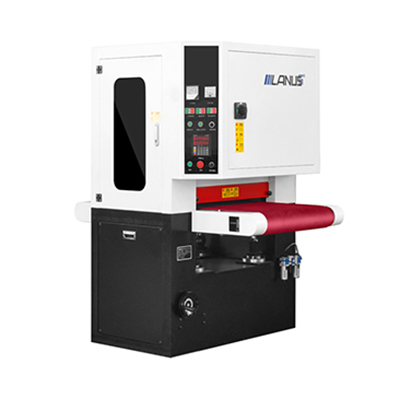
Choosing between wet and dry systems drastically impacts your daily operations. Dry machines maintain a lower initial footprint. They do not require complex plumbing or water filtration units. However, they demand strict, highly regulated dust extraction systems. You should deploy dry machines for dedicated, single-material production lines.
Wet machines utilize liquid coolant floods throughout the grinding zone. The coolant serves multiple crucial functions. It dramatically lowers the operating temperature. This prevents heat distortion and warping on thin-gauge parts. More importantly, it safely encapsulates volatile dust. A wet metal deburring machine allows you to safely mix different metals, like aluminum and steel, by actively neutralizing combustible dust risks.
You must evaluate physical machine limits against your actual production needs. Assess the available conveyor widths carefully. They dictate the maximum part size you can process in a single pass. Clearance heights determine if you can process formed parts or only flat blanks.
You also need to calculate load capacities. Heavy steel plates can stall undersized conveyor motors. Compare the machine's rated feed speeds against your target units-per-hour (UPH). Ensure the machine can match the pace of your upstream laser cutters or punch presses. A fast machine running slow parts creates a new bottleneck.
Not all burrs are created equal. You must differentiate between machines built for aggressive heavy-slag grinding and those designed for uniform micro-edge radiusing. Plasma cutters leave thick, hardened dross. You need rigid grinding drums and aggressive belts to shatter and remove this heavy slag.
Conversely, painted components require perfect edge rounding. Paint pulls away from sharp 90-degree edges due to surface tension, causing premature rust. Soft planetary brushes excel at creating these uniform micro-radii. They gently break the sharp edges required by stringent coating and painting specifications. Ensure your chosen equipment matches your exact finishing intent.
Safety compliance cannot be an afterthought. Processing metals like aluminum and titanium generates highly volatile dust. An airborne accumulation of this dust poses severe explosion risks. You must address these risks head-on to protect your facility and your workforce.
Regulatory bodies like OSHA and the NFPA heavily scrutinize metal dust management. You cannot simply vent aluminum dust into a standard shop vacuum. Detail the necessity of integrated wet dust collectors. If you insist on a dry system, you must install certified explosion-proof vacuums with isolation valves and blast-relief panels. Ignoring these compliance constraints invites catastrophic accidents and massive legal liabilities.
Never mix aluminum and steel dust in a dry collection bin; this creates a thermite hazard.
Implement a strict daily cleaning schedule to prevent dust accumulation on facility rafters.
Always verify that your dust collection equipment carries the appropriate NFPA certifications for combustible metals.
Many buyers focus entirely on the machine's sticker price. They overlook the hidden operational expenses of replacing abrasive media. Belts, brushes, and tumbling media wear down continuously. These items represent a significant ongoing budget line item.
You must assume standard wear rates during your evaluation phase. Ask vendors for the expected lifespan of their specific brush assemblies. High-quality ceramic belts cost more upfront but often outlast standard aluminum oxide belts by a wide margin. Factor these specific replacement intervals into your operational planning to avoid budget shock during your first year of production.
Installing a massive piece of industrial equipment requires careful logistical planning. Discuss the realities of your floor space constraints. Modern flatbed machines require adequate infeed and outfeed zones. Operators need room to stage material pallets safely.
Utility requirements often catch buyers off guard. Verify your facility can supply the necessary three-phase power. Check the required compressed air volumes for pneumatic belt tensioning systems. Wet machines require dedicated water lines and proper drainage or filtration recycling tanks. Furthermore, plan how the new equipment integrates into your existing conveyor flows or automated guided vehicle (AGV) paths.
An automated machine is only as effective as the person operating it. Clarify the learning curve associated with your chosen technology. Setting tension and feed rates on a pass-through flatbed machine is relatively straightforward. Most operators master the basic controls within a few days.
However, programming complex robotic toolpaths requires a vastly different skill set. Your team may need specialized CAD/CAM training to generate efficient robotic movements. Consider the technical aptitude of your current workforce. If you deploy a complex robotic cell, ensure the vendor provides comprehensive onsite training and responsive technical support.
Never start shopping without a rigidly defined application audit. Document your exact part geometries and base material types. Measure your initial burr sizes using digital calipers. You must know what you are starting with to know what you need to remove.
Define your final surface finish requirements. Use standardized metrics like Ra (Roughness Average) values. If your client requires a 32 Ra finish, you must communicate this clearly to equipment vendors. A vague request for a "smooth edge" will yield vastly different interpretations and likely lead to an underspecified machine purchase.
We cannot stress this enough: never buy on spec alone. A machine might look perfect on paper but fail completely on your specific parts. You must require OEMs to process a batch of your actual components. This is the only way to validate mechanical alignment.
Compile a diverse sample batch representing your thickest, thinnest, and most complex parts.
Send these directly to the shortlisted machine manufacturers.
Demand a detailed test report. This report must document exact cycle times achieved.
Require them to list the specific consumable wear observed and the exact machine settings (feed speed, brush RPM, pressure) used to achieve the result.
If a vendor refuses to perform sample testing, eliminate them from your shortlist immediately.
Look past the initial purchase order. You need to build a comprehensive 5-year operational model. This model will reveal the true impact of the equipment on your facility. Begin by factoring in annual maintenance contracts and recommended spare parts packages.
Next, calculate the estimated abrasive consumption based on the vendor's test data. Analyze the continuous energy draw of the heavy-duty motors. Most importantly, quantify your expected scrap reduction savings. When you stop ruining high-value parts through inconsistent manual grinding, the machine quickly pays for itself. Tracking these operational metrics ensures your investment delivers sustained manufacturing excellence.
Finding the right metal finishing equipment shifts your production from an unpredictable art to a highly manageable, scalable science. You no longer have to rely on the subjective touch of a grinder. Automated systems deliver repeatable, high-precision results day after day. They eliminate crippling bottlenecks and free up your skilled labor for more valuable tasks.
Mechanical alignment with your specific part geometry remains paramount. You must match the machine's kinetic action to your actual burr profile. Transparent vendor testing stands as the strongest pillar of a secure investment. Never guess how a machine will perform; prove it with empirical data.
We strongly encourage you to take immediate action. Compile a "worst-case scenario" part sample batch today. Gather your most difficult, burr-heavy components. Initiate testing with your shortlisted machine manufacturers. Let the empirical results guide your facility toward a more efficient, profitable future.
A: When calibrated correctly, it does not alter core dimensions. Automated systems utilize precise pressure controls and compliant tooling. This maintains strict tolerances and avoids the unintended gauge reduction or gouging frequently caused by aggressive manual grinding. It removes the burr while leaving the base geometry intact.
A: Sanding primarily focuses on surface-level material removal. It smooths the broad faces of a component. Deburring focuses specifically on edge geometry. It targets and removes the sharp ridges, dross, or burrs left behind on the material's borders by cutting or machining processes.
A: Abrasive lifespan varies wildly based on application. Harder materials like titanium degrade abrasives faster than aluminum. Severe plasma dross will destroy a belt much quicker than minor laser-cut burrs. Depending on duty cycles and material hardness, belts may last anywhere from a few shifts to several weeks.
A: Yes, but safety is paramount. Mixing steel sparks with combustible aluminum dust creates severe explosion hazards and exothermic reactions. You must heavily favor wet systems for mixed-metal processing. The coolant neutralizes sparks and safely encapsulates the volatile metal dust immediately upon generation.


