
Views: 174 Author: Site Editor Publish Time: 2026-06-12 Origin: Site
Processing stainless steel presents uniquely unforgiving challenges on the shop floor. Fabricators constantly battle high tensile strength, rapid work-hardening properties, and incredibly strict aesthetic requirements. Even minor surface defects can immediately disqualify components intended for critical applications. Relying on manual grinding or outdated equipment for stainless parts creates massive operational bottlenecks. These older methods quickly spike labor costs and introduce unacceptable micro-burr variations across batches. Manual inconsistencies frequently ruin highly expensive raw materials. You need a modern, reliable approach to finish parts correctly the first time. This article provides a pragmatic, evaluation-focused guide for modern fabrication facilities. You will learn exactly why investing in an automated, high-precision deburring machine is a necessary step. We explore how to scale your stainless steel fabrication efficiently, ensure strict regulatory compliance, and fully protect your production margins.
Material specific challenges: Stainless steel's tendency to work-harden and warp under heat makes manual deburring inconsistent and high-risk for high-value parts.
Yield and compliance: High-precision machines eliminate micro-burrs and establish exact edge-rounding tolerances required for medical, food-grade, or aerospace applications.
Operational ROI: Transitioning to an automated stainless deburring machine shifts labor from tedious hand-finishing to higher-value machine operation, reducing scrap and consumable costs.
Selection criteria: Evaluating a machine requires looking beyond base price to assess wet vs. dry capabilities, multi-directional brush configurations, and cross-contamination safeguards.
Inconsistent manual grinding generates extreme localized heat. This thermal energy severely impacts stainless steel. It rapidly hardens the surface structure of the metal. We call this phenomenon work-hardening. A hardened edge complicates all downstream processes. Operators struggle during bending operations because the hardened edge cracks under pressure. CNC machining tools also suffer premature wear when cutting through these hardened zones. An automated solution maintains consistent pressure and speed. It prevents localized heat buildup entirely.
Common Mistake: Relying on high-speed angle grinders to remove heavy burrs. They generate dangerous friction. They almost guarantee localized work-hardening on thin gauge stainless sheets.
Manual shop floors present severe contamination risks. Workers frequently share abrasive tools between standard carbon steel and stainless steel batches. This habit introduces free iron particles into the stainless surface. Embedded iron destroys the crucial passive chromium-oxide layer. It causes immediate and premature rust on finished parts. You cannot deliver rusty components to demanding sectors like aerospace or food processing. Dedicated automated equipment isolates your finishing process. It completely eliminates cross-contamination risks when managed correctly.
Maintaining uniform edge radiuses challenges even veteran operators. Complex geometries require steady, perfectly angled passes. Human hands simply cannot replicate a strict 2mm edge radius across a run of one thousand pieces. Fatigue sets in quickly. Pressures vary from morning to afternoon. These minor variations lead to rejected parts. They also compromise crucial weld fits during final assembly. Welds fail if joint edges lack strict uniformity. Automated solutions replace human fatigue with mechanical precision. They ensure the first part perfectly matches the last part.
You must weigh the hidden costs of manual grinding against automated predictability. Manual methods demand exceptionally high abrasive consumption. Operators burn through hand pads and sanding discs rapidly. Ergonomic injuries also plague manual finishing stations. Carpal tunnel and vibration-related issues drive up insurance premiums. Furthermore, you face intense labor dependency. Finding skilled grinders remains a chronic industry challenge.
Upgrading requires evaluating your production thresholds. Look closely at your part volumes and required tolerances. Track your monthly scrap rates closely. High volumes justify abandoning hand-held abrasives quickly. Automated systems offer unparalleled predictability.
Evaluation Factor |
Manual Grinding |
Automated Deburring |
|---|---|---|
Labor Dependency |
Extremely high; requires specialized skill |
Low; easily trained operators |
Abrasive Consumption |
High waste; irregular wear patterns |
Optimized; even media utilization |
Edge Consistency |
Poor; varies by operator fatigue |
Excellent; CNC-controlled precision |
Safety Risk |
High vibration and dust exposure |
Enclosed operation; integrated extraction |
Dry processing offers specific operational advantages. These systems boast lower initial purchase costs. They feature simpler daily maintenance routines. However, dry processing generates significant heat. You must also install robust dust extraction systems to handle hazardous particulates safely.
Wet processing stands as the gold standard for critical stainless applications. The continuous flood of coolant prevents all heat distortion. Thin delicate parts survive the process perfectly intact. Wet processing also delivers superior surface washing. Parts exit the machine clean and ready for packaging. More importantly, water mitigates all combustible dust risks. Investing in a high-quality stainless deburring machine using wet technology guarantees safety and perfection.
Mechanical abrasive action contrasts sharply with electrochemical removal. Mechanical systems use belts and brushes to physically abrade burrs. Electrochemical systems dissolve burrs using electrical current and chemical baths. Mechanical machines provide the versatile, scalable choice. They handle bulk fabrication, sheet metal, and heavy structural parts efficiently. Electropolishing serves a different niche. It removes internal burrs inside tubes. It also polishes micro-scale parts for medical implants. For standard shop floor operations, mechanical systems deliver the best flexibility.
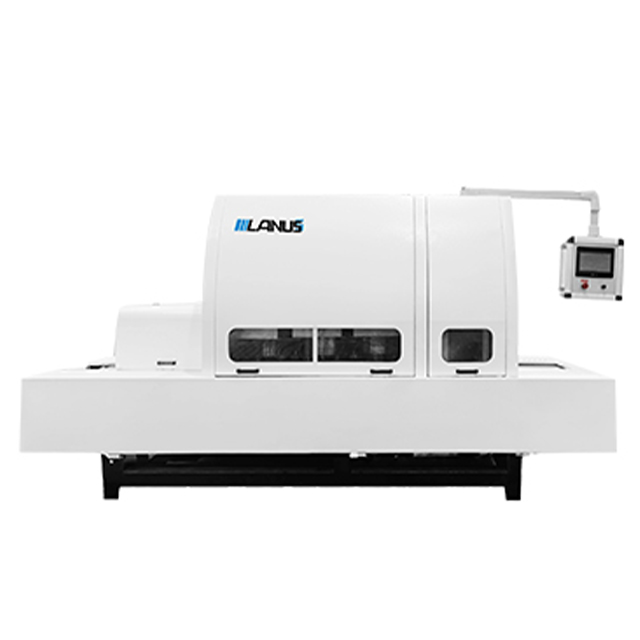
Machine architecture determines your true throughput speed. Single-pass machines dominate high-volume production floors. They process both the top and bottom of a part simultaneously. Operators feed parts in once. Finished pieces emerge completely deburred. Conversely, basic machines require multi-pass workflows. Operators must run the part, manually flip heavy stainless sheets, and re-feed them. Flipping sharp, heavy metal introduces extreme safety hazards. It also doubles your processing time. You should always evaluate top-and-bottom processing capabilities when scaling up production.
Uniform edge rounding requires sophisticated brush mechanics. Fixed belts only scratch in one direction. They leave secondary burrs on lateral edges. You need multi-directional or planetary brush heads. These advanced configurations ensure 360-degree processing. They guarantee uniform edge rounding on all contours, regardless of how you orient the part on the belt.
You must also prioritize easily swappable abrasive media. Stainless steel demands specific abrasive grains. You should exclusively use aluminum oxide or ceramic belts. Never use abrasives previously touched by carbon steel. Quick-change systems allow operators to swap media safely. This prevents catastrophic iron contamination.
Best Practice: Color-code your abrasive belts. Assign blue for stainless and red for carbon steel. Visual cues prevent accidental cross-contamination mistakes.
Securing parts during high-torque brushing represents a major engineering challenge. High-speed brushes exert tremendous lateral forces. Standard rubber belts cannot hold small or lightweight pieces securely. They will eject small parts violently. You must select advanced part-handling solutions. Stainless steel is often non-magnetic. Therefore, magnetic tracks provide no value for standard 300-series stainless alloys. Instead, look for high-flow vacuum conveyor belts. They grip non-magnetic stainless parts tightly against the belt. This secures even the smallest geometries during aggressive brushing operations.
Integrating industrial equipment requires careful facility planning. You cannot simply drop a machine onto the floor. Several infrastructure elements demand attention:
Floor Space Requirements: Allocate room for the machine footprint, plus space for infeed and outfeed tables. Allow clearance for maintenance access panels.
Power Consumption: High-torque drive motors draw significant amperage. Verify your facility possesses adequate electrical infrastructure.
Auxiliary Systems: Wet machines require dedicated coolant filtration units. Dry machines demand heavy-duty, explosion-proof dust collection systems. Both require extra floor space.
You must understand ongoing operating costs transparently. High-precision machines consume abrasive media predictably. You must schedule regular belt and brush replacements. Ignoring wear reduces quality immediately. Furthermore, wet machines require strict fluid maintenance. You must monitor coolant concentrations weekly. Skim tramp oils from the reservoir. Add biocides to prevent harmful bacterial growth. Regular cleanouts prevent heavy sludge buildup in the filtration system. Diligent maintenance extends machine life exponentially.
Do not underestimate the operational learning curve. Moving from manual hand tools to automated processing changes job roles. Operators no longer grind metal manually. They now manage CNC-level deburring parameters. They must learn to adjust feed speeds accurately. They need to set exact brush pressures. They must select the correct abrasive grit for specific finishes. This requires dedicated, formalized operator training. Vendor-supplied education ensures your team adopts the new technology smoothly. Skilled operators maximize equipment capabilities.
You must move beyond simple "faster processing" claims. True labor savings impact multiple financial categories. Calculate the direct reallocation of skilled labor. A welder no longer spends hours grinding edges. They spend time welding and generating revenue. Evaluate the reduction in mandatory overtime. Automated machines clear backlogs swiftly during standard shifts. Furthermore, factor in the complete elimination of manual rework. First-pass yield improves dramatically. You stop paying workers twice to fix mistakes.
Quantify the exact value of zero-defect runs. Regulated industries enforce strict burr-free mandates. Food processing equipment cannot harbor bacteria in micro-burrs. Pharmaceutical manufacturing requires perfectly smooth, sanitary surfaces. A single rejected batch destroys profit margins. Automated processing guarantees quality consistency. It safeguards your material investments. Reliable compliance allows you to bid on highly lucrative, strict-tolerance contracts confidently.
Selecting the right equipment vendor requires methodical steps. Follow this logical progression:
Audit current bottleneck data: Track the exact time your team spends manually deburring parts each week. Quantify the labor dollars wasted.
Calculate current scrap costs: Determine how much raw stainless steel you discard due to inconsistent manual finishing.
Demand application testing: Never buy machines based on brochures alone. Send your actual shop parts to equipment manufacturers.
Verify results empirically: Inspect the returned sample parts. Verify cycle times, edge radius uniformity, and final surface finish before finalizing any purchase.
Transitioning from manual grinding to automated processing marks a strategic operational shift. A high-precision machine functions as much more than just a finishing tool. It serves as a strict quality assurance gateway. It protects downstream assembly processes and ensures absolute end-user safety. By eliminating micro-burrs and work-hardening, you secure higher yields on expensive stainless materials. We strongly recommend prioritizing equipment vendors who act as true partners. Look for transparent ROI modeling and robust customer support. Always demand empirical proof of concept through rigorous sample part processing before you make your final equipment decision.
A: Technically yes, but doing so without changing abrasive media guarantees severe iron cross-contamination and rust. Standard steel leaves free iron particles on brushes and belts. Dedicated stainless media and thorough machine cleaning are mandatory between material changeovers. Ideally, facilities dedicate specific machines to stainless steel exclusively.
A: Modern machines offer highly precise calibrations. Operators can adjust specific brush types, pressures, and feed speeds. They can successfully deburr punched or laser-cut edges while leaving PVC surface protective films largely intact. The success depends entirely on the machine's control precision and the operator's setup parameters.
A: Modern automated equipment can consistently achieve precise edge radiuses up to 2mm or greater. This capability fully complies with strict sharp-edge safety standards, such as EN 1090. Guaranteeing this level of measurable, repeatable tolerance manually across high-volume production runs is virtually impossible.


