
Please Choose Your Language
Views: 157 Author: Site Editor Publish Time: 2026-06-22 Origin: Site
Metal fabrication thrives on speed and precision. However, modern cutting methods rarely produce a finished edge right off the table. Laser cutting, plasma cutting, and punching all leave behind dross, stubborn slag, and razor-sharp burrs. These defects quickly bottleneck downstream operations. They make welding inconsistent. They also cause powder coatings to fail by pulling away from sharp corners.
Historically, shops relied on manual grinding to fix these edges. This approach requires heavy labor and introduces severe inconsistencies. It also creates ongoing safety hazards. Transitioning to automated mechanization solves these exact problems directly.
This guide provides a strictly objective, decision-focused framework. It helps you evaluate mechanical finishing options without the guesswork. You will learn how to assess equipment technologies accurately. By the end, you can select the right machinery for your specific fabrication workflows and material requirements.
Upgrading to an automated deburring machine significantly reduces labor costs, eliminates human error, and ensures consistent edge quality across high-volume runs.
Selecting the right equipment requires matching the machine’s technology (belts, brushes, or rotary blocks) to your specific material (e.g., stainless steel, aluminum) and primary defect type.
The most reliable purchasing decision relies on running sample parts through a shortlisted machine to verify cycle times and finish quality.
Manual edge finishing creates a severe bottleneck on the shop floor. When operators grind parts by hand, cycle times become entirely unpredictable. One worker might spend three minutes on a steel plate. Another might spend ten. This variability destroys production schedules. Quality also fluctuates wildly across different shifts. Inconsistent edge rounding often leads to coating failures. Paint naturally thins out over sharp edges, causing early rust in the field. Furthermore, uneven edges prevent proper weld penetration, compromising structural integrity.
Safety and compliance present another major concern. Handheld angle grinders pose constant risks. Operators face repetitive strain injuries from prolonged vibrations. Lacerations occur frequently when handling sharp metal sheets manually. Airborne metallic dust also causes respiratory issues if not managed properly. Automating this process removes workers from direct harm. It encloses the abrasive action safely away from human hands.
A successful implementation fundamentally changes your workflow. You can measure this success through three distinct metrics. First, you will see a drastic reduction in your cost-per-part. Second, overall throughput will increase since finishing no longer delays shipping. Third, you achieve a zero-defect acceptance rate downstream. When your welders and painters receive uniform parts, they work faster and produce better results.
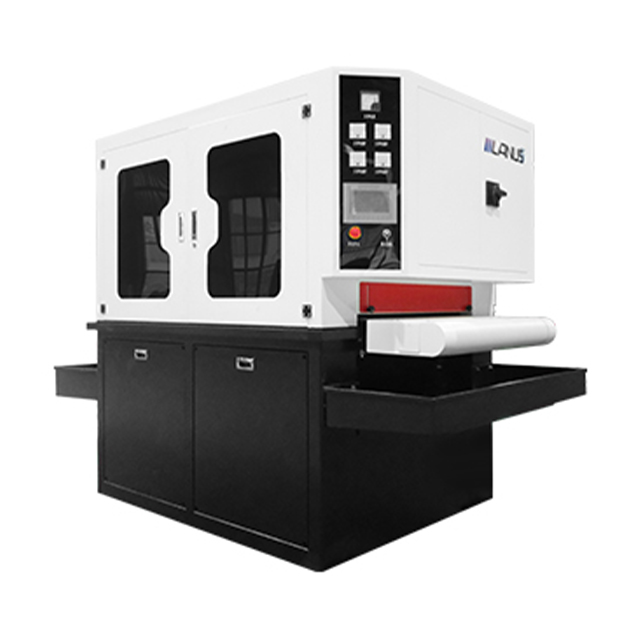
Fabrication shops must choose between manual finishing tools and automated pass-through systems. You base this choice entirely on your daily production volume and part geometry. Selecting the wrong method traps your facility in inefficiency.
Manual deburring relies on handheld grinders, orbital sanders, or small benchtop wheels. These tools suit low-volume, high-mix custom fabrication shops. They also excel at processing complex 3D geometries. If you weld a custom chassis, a worker must grind the joints manually.
However, manual tools carry strict limitations. You cannot guarantee consistent edge rounding across fifty identical parts. You remain highly dependent on skilled labor. When experienced grinders retire or call in sick, production stops. Manual finishing inherently caps your ability to scale operations.
Pass-through systems use conveyor belts to feed flat sheet metal under spinning abrasive heads. These automated plate deburring machines represent the industry standard for high-volume production. They perfectly complement post-laser and plasma cutting operations.
Automated systems offer massive advantages. They deliver predictable cycle times every single run. You achieve perfectly uniform edge radiusing across thousands of parts. You also gain the ability to process dozens of small parts simultaneously. You just load them across the width of the conveyor belt.
Shops typically hit a clear break-even indicator. When you process over a certain daily threshold of sheet metal, the capital expenditure pays for itself quickly. The labor savings alone often cover the monthly equipment financing.
Comparison Chart: Manual vs. Automated Processing | ||
Evaluation Criteria | Manual Finishing Tools | Automated Pass-Through Systems |
|---|---|---|
Best Application | Complex 3D parts, low-volume runs | Flat sheets, high-volume batches |
Edge Consistency | Low (Highly operator-dependent) | High (Digitally controlled parameters) |
Labor Dependency | Intensive (1:1 ratio of part to worker) | Minimal (1 operator for multiple parts) |
Cycle Time | Unpredictable | Fixed and measurable |
No single abrasive head solves every finishing problem. Manufacturers build machines using distinct mechanical modules. You must match the internal technology to your base material and primary defect type.
Wide abrasive belts look similar to giant industrial sanders. Their primary function involves the aggressive removal of heavy vertical burrs. They also strip away thick dross left behind by plasma and flame cutting. The belt rotates rapidly in one direction, slicing off protruding metal.
These belts work best on thick carbon steel plates. However, you must exercise caution regarding grit selection. Using too coarse a grit will cause deep gouging in the metal surface. This requires secondary processing to fix. Wide belts only hit the leading and trailing edges of a part effectively. They do not round the side edges uniformly.
Rotary brush blocks and cross belts spin multi-directionally over the part surface. They provide a fundamentally different function. These modules deliver true edge rounding. They remove stubborn oxide layers left by laser cutting. They also apply a uniform surface grain finish without altering the overall part thickness.
These systems are ideal for stainless steel and aluminum sheet metal. The flexible bristles contour around the edges perfectly. This step remains crucial when preparing parts for powder coating. The rounded edge allows paint to grab hold securely.
You must decide between a wet or dry internal operating environment. Dry machines carry a lower initial purchase cost. They require robust, standalone dust collection systems to operate safely. Maintenance remains relatively simple.
Wet machines pump coolant fluid over the parts during processing. They are absolutely essential for mixed-metal processing. Cutting aluminum one hour and steel the next creates an explosive dust combination in dry machines. A steel spark can easily ignite suspended aluminum dust. Wet systems wash this dust away instantly. They also minimize part warping by absorbing the friction heat.
For Heavy Slag: Always place a wide belt head in the first station to knock down vertical protrusions.
For Coating Prep: Specify at least two rotary brush stations to guarantee a measurable edge radius.
For Mixed Metals: Default to a wet system if your shop cuts both steel and aluminum daily.
Buying an industrial deburring machine represents a major facility upgrade. You must evaluate the hardware through a strict operational lens. Do not rely solely on brochure specifications. Ask hard questions about how the equipment fits into your existing ecosystem.
Throughput & Scalability: You must match the machine’s conveyor width to your largest standard plate dimensions. If you regularly process 48-inch wide sheets, a 36-inch machine creates an instant bottleneck. Similarly, evaluate the feed speed. Ensure the machine can keep pace with your laser cutter's daily production quotas.
Consumable Economics: Abrasives wear out continuously. Evaluate the changeover time for belts and brushes. Can a single operator swap a belt in five minutes, or does it take two technicians twenty minutes? Look closely at the projected lifespan of these consumables based on your primary materials. Harder alloys consume abrasives much faster.
Material Handling Integration: Consider how parts move into and out of the machine. Assess whether the system can integrate seamlessly with existing return conveyors. Determine if it accepts robotic loaders. Think about downstream flow. Can you attach a washing and drying station directly to the exit conveyor?
Footprint & Utility Requirements: These machines command significant floor space. You must account for the physical footprint of the machine itself plus the required dust collector. Furthermore, check your utility drops. These systems require high-volume compressed air and high-amperage electrical connections. Upgrading your shop's electrical panel adds unexpected costs.
Vendor Support & Parts Availability: Even the best machines require maintenance. Prioritize manufacturers that employ domestic or regional service teams. When a bearing fails, you cannot wait two weeks for overseas shipping. Ensure the machine uses standardized, easily sourced abrasive components rather than proprietary, locked-in brands.
Installing the equipment is only the first step. Operating it safely and efficiently requires strict discipline. Many shops stumble during the initial rollout because they ignore crucial safety protocols and training requirements.
A machine is only as safe as its dust collection system. Combustible metal dust creates severe explosion hazards. You must adhere strictly to NFPA and OSHA compliance standards regarding combustible dust. You cannot vent metal particulate into a standard shop vacuum. You need dedicated wet downdraft tables or specialized dry collectors with explosion isolation valves. Never mix incompatible metal dust streams.
Automated equipment still requires human intelligence. Operators face a distinct learning curve. They must calibrate brush pressure and conveyor speed precisely. Applying too much pressure leads to over-machining. This ruins part dimensions and accelerates consumable wear needlessly. Operators must learn to read the amperage meters. The meters tell them exactly how hard the abrasive motors are working.
Processing small parts presents a unique danger. The spinning abrasive heads generate immense lateral force. If the conveyor bed lacks grip, small parts become high-speed projectiles. This damages the machine internals and poses severe safety risks. Standard rubber belts work fine for large plates. For small carbon steel parts, you need a magnetic track bed. For non-ferrous metals like aluminum, you absolutely need a high-friction vacuum conveyor bed to secure the pieces safely.
Never buy a machine blind. You must follow the sample run rule. Strongly advise your engineering team to collect the dirtiest, most difficult production parts you make. Send these actual parts to the equipment manufacturer for a test run. Request video proof of the process. Demand to inspect the finished parts before finalizing any purchase order. This proves the machine can hit your specific cycle times.
Many fabricators try to process oily or heavily greased parts through a dry machine. The oil instantly blinds the abrasive belts, rendering them useless and creating a severe fire hazard. Always ensure parts are clean before dry processing, or opt for a wet processing system.
Edge quality directly impacts the success of your entire fabrication process. The right automated equipment transforms a messy, labor-heavy bottleneck into a predictable, high-speed manufacturing step. You eliminate the human inconsistencies of handheld grinding. You also create a safer, cleaner environment for your workforce.
Take immediate action by auditing your current manual finishing operations. Track exactly how many hours your team spends grinding parts this week. Next, draft a strict list of your daily material requirements, part sizes, and defect types. Present this detailed audit to potential equipment vendors. Use this data to request highly targeted RFQs, ensuring your new equipment matches your floor reality perfectly.
A: Deburring strictly removes vertical slag, dross, and sharp metallic protrusions from the cutting process. It makes the part flat. Edge rounding goes a critical step further. It creates a specific, uniform radius on the sharp 90-degree corners. This radiused edge ensures proper paint and coating adhesion while making the part safe for bare-hand handling.
A: Yes, but doing so safely in a dry machine requires stringent, time-consuming cleaning protocols between runs. You must remove all traces of dust to prevent combustible fires caused by cross-contamination. A wet processing machine is the safer, standard choice for high-mix metal shops cutting both materials daily.
A: This depends entirely on the conveyor bed type. Standard rubber belts may struggle to grip parts smaller than 2x2 inches. The abrasive heads will kick them out. However, machines equipped with high-friction vacuum belts or internal magnetic tracks can secure much smaller components safely against the abrasive forces.
A: Yes. When equipped with specific wire or abrasive brush configurations, the machine can strip the stubborn oxide layer away from laser-cut edges. Removing this dark scale is a mandatory preparation step. If you leave the oxide layer, subsequent welding fails, and powder coatings will easily flake off the edge.


