
Please Choose Your Language
Views: 145 Author: Site Editor Publish Time: 2026-06-26 Origin: Site
Transitioning from manual grinding to an automated system is a high-stakes investment. The wrong choice leads to surface damage, production bottlenecks, and wasted abrasive costs. Manual deburring is inconsistent and labor-intensive. Operators tire quickly. This fatigue introduces human error into your finishing processes. Buyers need a system balancing throughput, precision, and operational safety without over-specifying capabilities. You must clearly understand your exact production goals.
We provide a structured, manufacturer-agnostic framework below. You will learn to evaluate, shortlist, and validate the right equipment for your specific facility requirements. This guide removes the guesswork from your equipment search. It focuses heavily on matching machine capabilities directly against your unique part geometries and daily production volumes. Make your next capital equipment purchase a confident one.
Matching the machine to the specific metal type, part geometry, and required finish is more critical than raw horsepower.
Automated deburring shifts costs from labor to consumables; evaluating abrasive lifespan and total cost of ownership (TCO) is essential.
Distinguishing between primary deburring (slag/burr removal) and secondary finishing (edge rounding/polishing) dictates the required machine configuration.
Never purchase without a verifiable sample run using your own standard and worst-case parts.
You cannot select the right deburring machine unless you clearly define your current operational bottlenecks. Many shop managers misdiagnose their finishing problems. They buy excessive machinery or underpowered units. Thoroughly evaluate your baseline metrics first.
Quantify the hidden costs of manual finishing daily. Hand grinding hides massive inefficiencies. You lose valuable labor hours constantly. Operators easily over-grind delicate edges. This aggressive manual work causes inconsistent finishes. It inflates your scrap rates significantly. Track how many parts fail quality control due to poor edge radii. Calculate your weekly abrasive disc consumption. Documenting these baseline metrics gives you a definitive target for improvement.
Common Mistake: Treating manual grinding labor as a fixed cost. When you automate, you free up skilled welders and fabricators for higher-value production tasks.
Define your exact technical requirement immediately. Do you need primary slag removal or secondary edge refinement? These are distinctly different operations. Removing vertical burrs requires highly aggressive tooling. You typically need stiff abrasive belts or hard grinding rollers. Conversely, creating a defined uniform radius on an edge demands completely different mechanics. You need flexible rotary brushes or flap wheels for edge rounding. These tools wrap around the part edges safely.
Establish clear throughput requirements before contacting vendors. Determine your required parts per minute or parts per hour accurately. Are you running a high-mix, low-volume job shop? Your machine must accommodate rapid tooling changes. Do you process low-mix, high-volume continuous runs? You will need robust cooling systems and heavy-duty conveyor drives. Scalability matters immensely. Buy a machine capable of handling your projected growth three years from now.
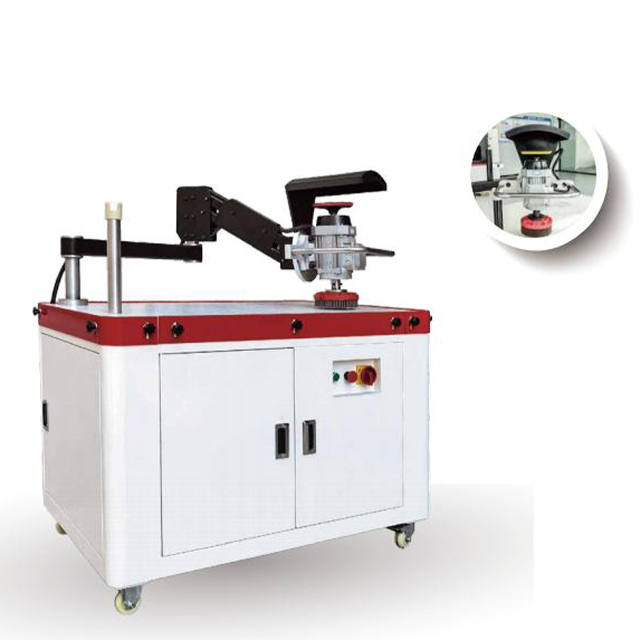
Understanding the core equipment categories prevents costly specification errors. Each design serves highly specific material applications. Here is a breakdown of the primary systems available today.
Wide belt units function similarly to industrial wood sanders. They drag a wide abrasive belt continuously across the metal surface.
Best for: Heavy slag removal following plasma cutting. They excel on flat sheet metal. They easily produce straight-line grain finishing, such as a No. 4 stainless finish.
Limitations: They remain completely ineffective on complex 3D parts. They cannot reach inside internal holes. They can aggressively alter part thickness if calibrated improperly. Operators must monitor belt wear constantly.
These units utilize spinning abrasive brushes traversing across a conveyor bed. They attack parts from multiple angles simultaneously.
Best for: Achieving perfectly uniform edge rounding. They handle parts featuring varying contours beautifully. They process laser-cut and punched components efficiently without damaging surface films.
Limitations: They offer slower material removal rates compared to wide belts. They struggle against heavy dross. You must select brush density carefully based on metal hardness. Processing titanium requires distinctly different brushes than aluminum.
This category uses mechanical agitation. It mixes parts together among ceramic or plastic abrasive media inside a large bowl.
Best for: Small, complex, or cast parts processed in massive bulk quantities. They reach internal channels and blind holes easily.
Limitations: Cycle times take much longer. Sometimes batches take several hours. You must manage wet processing fluids. Facilities require dedicated media separation systems to sort finished parts from the stones.
These systems pair articulating robotic arms alongside specialized grinding spindles. They offer ultimate motion control.
Best for: Heavy, complex 3D components. Think aerospace castings or automotive engine blocks. They maintain incredibly tight tolerances consistently.
Limitations: They require extremely high initial CapEx. They demand specialized programming expertise. Setup and integration take substantial time. They rarely suit small job shops processing diverse, low-volume batches.
Machine Type | Primary Application | Ideal Part Geometry | Relative Initial Cost |
|---|---|---|---|
Wide Belt | Heavy burr & slag removal | Flat sheet metal | Moderate |
Rotary Brush | Edge rounding & oxide removal | Laser-cut/punched sheets | Moderate to High |
Vibratory Bowl | Bulk processing small parts | Complex 3D, internal holes | Low to Moderate |
Robotic Cell | Precision tolerance finishing | Heavy castings, engine blocks | Very High |
Never purchase equipment based solely on a brochure. Apply this four-point framework strictly. This ensures the metal deburring machine aligns seamlessly against your daily shop floor realities.
Material Compatibility & Sheet Thickness: Assess how the equipment handles different alloys. Aluminum behaves differently than stainless steel. Aluminum generates sticky dust. Stainless steel demands harder abrasives. Address the challenge of keeping thin sheets from warping under abrasive pressure. You often need vacuum conveyor beds to secure lightweight parts. Magnetic tracks work wonderfully for ferrous metals.
Part Geometry & Tolerances: Evaluate how the machine processes unique features. Many parts feature protective PVC films. Can the machine round edges without stripping this film? Consider varying surface heights. Internal cutouts present unique challenges. Flexible brush systems adapt to height variations nicely. Rigid belts often destroy delicate surface details.
Wet vs. Dry Processing: This represents a critical facility decision.
Dry systems: They boast lower initial costs. Routine maintenance remains easier. However, they require strict dust management protocols. You must install secondary dust collectors.
Wet systems: These units are superior for heat-sensitive metals. The coolant eliminates combustible dust risks completely. However, they require daily coolant management. You must filter and dispose of the resulting abrasive slurry properly.
Footprint & Integration: Factor in the total floor space required. Do not look at just the machine dimensions. Account for essential material handling equipment. You need adequate room for infeed and outfeed conveyors. Consider necessary compliance peripherals. Dust collectors and coolant tanks consume substantial square footage. Ensure your facility has appropriate electrical and compressed air drops nearby.
Automated finishing introduces new operational variables. Understanding these daily realities prevents post-installation regret. Focus heavily on consumables, safety protocols, and operator usability.
Analyze the ongoing expense of abrasive belts, brushes, and tumbling media continuously. Cheaper equipment frequently lacks adequate tensioning systems. This flaw causes premature abrasive wear. Rapid belt degradation negates initial equipment savings entirely. High-quality systems use oscillating belts. Oscillation distributes wear evenly across the abrasive surface. Always ask vendors for estimated consumable lifespans based on your specific alloys.
You must address strict OSHA and NFPA regulations proactively. Combustible metal dust creates severe explosive hazards. Titanium and aluminum represent extreme fire risks. Mixing aluminum and steel dust creates a volatile thermite hazard. Detail the necessity of integrated wet downdraft tables. Alternatively, specify specialized dry dust collectors featuring explosion relief vents. Never cut corners regarding combustible dust management.
Best Practice: Dedicate specific machines to single material types if possible. If you must mix metals in a dry system, mandate rigorous daily cleaning protocols between material changeovers.
Evaluate the UI/UX of the control panel closely. Modern touchscreens simplify complex setups. Systems requiring constant manual calibration for abrasive wear increase operator error significantly. Human error destroys expensive parts. Look for automated wear-compensation features. These systems measure brush length automatically. They adjust the grinding head downward precisely as the abrasive degrades. This automation guarantees consistent finishes across different shifts.
Narrowing down your options requires physical evidence. Do not trust marketing claims blindly. Force vendors to prove their equipment capabilities on your specific components.
Never rely on spec sheets alone. Send a batch of your most difficult parts directly to the OEM application facility. Include your worst-case parts featuring heavy dross. Include parts featuring delicate internal cutouts. Ask the vendor to record a video of the actual processing run. This verifies cycle times accurately. It proves the equipment handles your specific geometries without jamming.
Inspect the returned samples rigorously. Do not just look at them; use precise measurement tools. Check for uniform edge radii using radius gauges. Ensure surface roughness (Ra) compliance using a profilometer. Confirm the absolute absence of secondary burrs. Sometimes aggressive belts simply roll burrs over rather than removing them. Reject any machine failing these specific quality checks.
Assess post-sale support capabilities thoroughly. Ask about replacement part availability. Are spare parts stocked locally or shipped internationally? Inquire about technician dispatch times. Ask for references from current users regarding reliability. Review the comprehensiveness of their operator training programs. Even the best equipment fails occasionally. Excellent vendor support keeps your production lines running smoothly.
Selecting an industrial metal finishing system is a delicate balancing act. You must harmonize part geometry, required finish, and ongoing operational costs. Focus heavily on ensuring your facility can safely manage the dust or slurry generated by the process.
Prioritize safety compliance, abrasive efficiency, and operator usability over the lowest sticker price. Cheaper machines often drain budgets quickly through rapid consumable wear and excessive downtime. Built-in automation features, like automatic wear compensation, guarantee repeatable quality day after day.
Do not finalize any capital purchase blindly. Consult an application engineer today. Schedule a comprehensive time study. Request a sample processing run using your most difficult production parts. Seeing your exact components finished flawlessly provides the ultimate purchasing confidence.
A: Deburring removes the sharp, unwanted material left by cutting operations like plasma or laser. Edge rounding goes a step further. It intentionally machines a smooth, uniform radius onto the edge of the part. This improves paint adhesion and makes parts safe for handling.
A: Yes, but it introduces severe combustible dust hazards if dry processing is used. Mixing these dusts creates dangerous conditions. Wet machines eliminate this risk entirely. If using dry equipment, dedicated dust collection systems and meticulous cleaning between metal changeovers are mandatory.
A: Thin metals warp due to heat and downward pressure. Utilize machines featuring vacuum conveyor beds or magnetic tracks to secure the parts firmly. Employ flexible rotary brush technology instead of rigid wide belts. Brushes apply much less aggressive downward pressure, keeping thin sheets perfectly flat.


