
Views: 126 Author: Site Editor Publish Time: 2026-07-04 Origin: Site
Laser cutters and punch presses operate at lightning speeds in modern fabrication shops. However, finished parts routinely pile up at the finishing station. This massive backlog frustrates production managers. You invest heavily in rapid cutting technology, yet output stalls when raw edges require refinement. Manual grinding and outdated equipment create critical production bottlenecks. They increase labor costs and introduce unacceptable quality inconsistencies across your batches.
Transitioning to automated, high-throughput finishing systems becomes a necessary step. It allows you to scale operations predictably and meet tight deadlines. Upgrading immediately improves worker safety by removing hazardous, repetitive manual tasks. Furthermore, it ensures perfect coating adhesion for downstream processing. You will learn exactly how modern finishing equipment eliminates production delays. We will explore core processing technologies, evaluation criteria, and practical implementation realities below.
Upgrading to a fast deburring machine shifts finishing from a labor-intensive bottleneck to a predictable, high-speed automated process.
Single-pass, double-sided processing technologies offer the highest throughput for high-volume sheet metal fabrication.
Evaluating a deburring machine requires looking beyond purchase price to factor in consumable lifespan, changeover times, and dust compliance.
Proving ROI involves measuring reduced scrap rates, reallocated labor, and zero-defect downstream processing (e.g., welding and painting).
Manual edge rounding carries immense hidden costs. Shops relying on angle grinders face inconsistent part quality daily. One operator applies heavy pressure, while another barely grazes the metal. This variability ruins tight tolerances. High labor turnover plagues manual finishing departments. The work is dirty, loud, and physically exhausting. Workers face severe fatigue and persistent safety hazards. Repetitive strain injuries (RSI) and lacerations happen frequently. These injuries trigger costly downtime and raise insurance premiums.
Inadequate edge finishing heavily impacts downstream processes. Sharp burrs lead to mechanical binding during final assembly. Paint and powder coatings physically cannot adhere to sharp corners. The coating pulls away during curing, leaving bare metal exposed to rust. This single failure causes entire batches to face rejection. Customers return rusting parts, severely damaging your brand reputation.
Adopting an automated fast deburring machine solves these fundamental issues. You should frame this adoption as a strict requirement, not merely an operational upgrade. Maintaining competitive lead times requires predictable flow. High-volume environments cannot afford random manual delays. Automation transforms edge finishing into a highly controlled, mathematically precise step. It guarantees every part leaving your line matches exact specifications.
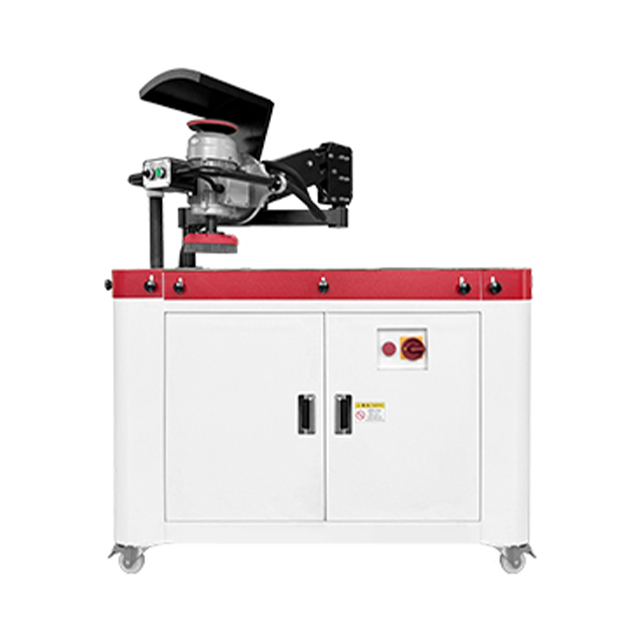
Understanding internal processing mechanisms helps you choose the right equipment. Modern systems utilize distinct abrasive setups to achieve different finishes. Selecting the wrong technology creates secondary bottlenecks.
Wide abrasive belts excel at aggressive material removal. They are the best choice for cleaning plasma or flame-cut parts. Heavy dross and vertical burrs disappear quickly under a coarse belt. However, wide belts carry a distinct limitation. They run in a single linear direction. This directional scratch pattern may require secondary passes if you need perfect, multi-directional edge rounding. They handle the heavy lifting but sometimes struggle with delicate radius requirements.
Rotary brushes spin while oscillating across the conveyor bed. Planetary systems rotate multiple brush heads in complex orbits. These setups are ideal for uniform, multi-directional edge rounding. They effortlessly remove the stubborn oxide layers left by nitrogen or oxygen laser cutting. Planetary systems ensure a perfectly consistent radius on all edges. The finish remains identical regardless of how you orient the part on the conveyor.
Processing parts on both sides simultaneously is the ultimate high-volume solution. Single-pass machines process the top and bottom simultaneously. This technology cuts handling time by exactly 50 percent. Operators no longer manually flip heavy steel plates. Eliminating this manual flipping drastically reduces operator fatigue. Double-sided systems maximize conveyor density and keep parts moving continuously toward the shipping department.
Technology Type |
Primary Application |
Key Advantage |
Limitation |
|---|---|---|---|
Wide Belt |
Plasma / Flame Cut |
Aggressive vertical burr and dross removal |
Linear scratch pattern; limited edge rounding |
Planetary Brushes |
Laser / Waterjet Cut |
Uniform 360-degree edge rounding |
Struggles with heavy, thick slag |
Double-Sided |
High-Volume Stamping / Laser |
Halves processing time; no part flipping |
Requires higher initial capital investment |
Purchasing finishing equipment demands rigorous evaluation. You must align machine capabilities directly with your daily production metrics. Follow these prioritized steps to evaluate potential systems effectively.
Analyze Throughput vs. Quality: You must balance conveyor speed with required finish quality. Faster speeds do not always yield better results. Pushing parts too quickly might require a second pass. A machine running at 10 feet per minute in a single pass outperforms a machine running at 15 feet per minute requiring two passes.
Assess Consumable Changeover and Lifespan: Abrasive wear is inevitable. Look closely at quick-change tooling mechanisms. Excessive downtime for replacing belts destroys high-volume efficiency. If operators need thirty minutes to change a brush, you lose hours of production weekly.
Verify Automated Setup Features: Operator error during batch changeovers causes massive scrap. Look for equipment offering automated thickness calibration. Programmable recipes allow operators to press a single button for a specific part run. The machine auto-adjusts pressure and height, eliminating guesswork.
Evaluate Material Versatility: High-volume shops rarely cut just one material. Your machine must handle carbon steel, stainless, and aluminum. It should accommodate varying thicknesses without requiring extensive manual retooling. Versatility keeps the conveyor loaded regardless of the daily production schedule.
Justifying the upgrade involves measuring direct operational improvements. The financial impact becomes evident quickly when you analyze labor and scrap metrics.
Labor reallocation provides immediate value. Imagine moving two or three manual grinders to higher-value tasks. You can train them to operate CNC brakes or perform basic welding. You stop paying skilled wages for unskilled grinding tasks. This shift maximizes your existing workforce without increasing headcount. The automated system handles the volume of three manual grinders consistently.
Scrap and rework reduction transforms your margins. Predictable, machine-controlled tolerances eliminate the human error variable. Manual grinders inevitably over-process parts, ruining critical dimensions. Automated systems apply exact, uniform pressure. They reduce edge-related rejection rates to near zero. Every piece leaving the conveyor meets stringent quality control standards.
Energy and consumable efficiency also drive solid returns. Compare the cost of manual grinding discs over twelve months. Hand discs wear out rapidly and require constant purchasing. Conversely, industrial abrasive belts and brushes boast extended lifespans. They process thousands of parts before needing replacement. Your consumable spending stabilizes, making monthly budgeting highly predictable.
Integrating heavy finishing equipment involves serious safety and logistical considerations. You must prepare your facility for the physical realities of automated grinding.
Dust extraction is a critical safety requirement. You must adhere to strict NFPA and OSHA compliance standards. Grinding creates microscopic metal dust. When you process mixed materials, the risk amplifies. Mixing steel sparks with aluminum dust creates a highly combustible thermite reaction. Your extraction strategy must prevent this catastrophic risk. Proper ducting, isolation valves, and explosion vents are non-negotiable safety elements.
You must choose between wet and dry dust collection. Wet systems pull dust through a water cascade. They heavily mitigate explosion risks and simultaneously cool the parts. However, wet systems require dedicated coolant management. You must dispose of the resulting hazardous sludge properly. Dry systems remain highly popular for their simplicity. They require robust, self-cleaning filtration cartridges. You must empty dry collection bins regularly and maintain spotless internal chambers to prevent spark ignition.
A reliable deburring machine requires significant floor space. You cannot simply squeeze it into a tight corner. Factory layout planning is essential. Ensure adequate space for large material handling carts. You need room for both in-feed and out-feed conveyors. Maintenance teams require clear access to side panels for belt changes. Poor placement disrupts forklift traffic and negates the throughput benefits of the machine.
Moving from research to procurement requires a structured approach. Never rely strictly on vendor brochures. You must demand proof of performance.
Define Your Success Criteria: Establish acceptable processing times beforehand. Document your required edge radius and surface finish metrics. Know your exact needs before speaking to vendors.
Mandate a Sample Run: Never purchase based on specifications alone. Require vendors to process your actual, worst-case parts. Send them parts with heavy dross or complex geometries. Demand a video of the run to verify true throughput speeds. Inspect the returned parts to confirm finish quality.
Evaluate Vendor Support: High-volume fabrication relies on uptime. Check Service Level Agreement (SLA) terms carefully. Verify local technician availability in your specific region. Ask about their domestic spare parts inventory. Waiting weeks for an imported replacement belt is catastrophic for production.
Investing in automated finishing equipment represents a strategic decision to protect profit margins. It successfully unblocks your production pipeline and accelerates daily output. The technology transforms unpredictable, dangerous manual labor into a highly controlled process. Operations managers and procurement teams should audit their current finishing times immediately. Clock your manual grinders to build an accurate baseline. Identifying these hidden labor costs makes the upgrade justification straightforward.
Do not let your laser cutters outpace your finishing department any longer. Take action to balance your production floor today. Request a sample part processing from a reputable manufacturer. Schedule a workflow consultation with a technical specialist to find the perfect configuration for your shop.
A: Yes, but it requires strict safety protocols. Mixing steel sparks with aluminum dust triggers dangerous thermite reactions. You must use a wet dust collector to neutralize the sparks. If using a dry system, you must thoroughly clean the machine, filters, and ductwork between material changeovers to prevent combustible explosions.
A: Lifespan varies heavily based on material hardness and initial burr size. Wide belts may last several days under aggressive use. Industrial planetary brushes can last hundreds of hours. Vendors should provide predictable consumable longevity estimates during your evaluation process.
A: It physically removes the micro-sharp edges that cause paint to pull away during the curing process. It also strips away the slick oxide layer left by nitrogen or oxygen laser cutting. This action creates an optimal, slightly textured surface profile, guaranteeing strong and permanent coating adhesion.


