
Please Choose Your Language
Views: 135 Author: Site Editor Publish Time: 2026-07-01 Origin: Site
Metal finishing often acts as the critical bottleneck in high-volume fabrication. Manual processes drain margins heavily. They also compromise part consistency across batches. Hand-grinding leaves unpredictable, sharp edges. These edges slow down final assembly. They also endanger your workers on the shop floor.
Shops are actively shifting away from manual edge-breaking. They increasingly adopt a robust automatic deburring machine. This transition stabilizes daily throughput rapidly. It ensures strict safety compliance facility-wide. You replace unpredictable hand-grinding hours with consistent, highly reliable cycle times.
This article provides a pragmatic framework. You will learn how to evaluate automated finishing solutions effectively. We explore how to calculate realistic efficiency gains. We also detail ways to mitigate deployment risks. You can use these practical insights to build a safer, faster, and highly predictable production environment.
Transitioning to an automatic deburring machine predictably increases throughput while standardizing edge quality across production runs.
Selecting the right machine requires matching the technology (e.g., wide belt, rotary brush, vibratory) to specific material constraints, particularly in sheet metal applications.
True ROI calculations must factor in not just labor displacement, but consumable costs, utility requirements, and operator training time.
Successful implementation demands a phased rollout, prioritizing safety compliance and continuous dust management/extraction.
Manual deburring carries enormous hidden expenses. Labor-intensive hours eat into profitability directly. Human error causes high scrap rates continually. An operator might apply too much pressure late in a shift. This ruins expensive material instantly. You also face severe worker compensation claims. Repetitive stress injuries ruin careers over time. Lacerations from sharp edges increase insurance premiums. These hidden costs cripple shop growth.
Automated systems transform unpredictable workflows entirely. They convert variable labor into a fixed cycle time. You load a part onto the conveyor. The equipment finishes it in exactly thirty seconds. This throughput predictability allows accurate downstream scheduling. Production managers can finally trust their daily output forecasts. Predictability builds stronger client relationships.
How do you measure automation success? You must define clear benchmarks early. First, the process must yield zero sharp edges. Second, parts must adhere to strict micro-finish tolerances consistently. Third, the upgrade must reduce secondary operational bottlenecks. Downstream painting or welding stages should never wait for finished parts. Meeting these criteria guarantees a successful transition.
Common Mistake: Relying solely on direct labor reduction to justify the automation upgrade. You must also measure scrap reduction and increased downstream velocity to capture the full business value.
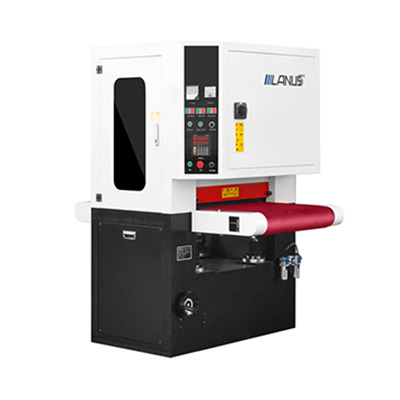
Modern finishing technology drives efficiency through smart engineering. Simultaneous multi-directional processing changes everything. Older manual methods required constant part flipping. A premium deburring machine handles top, bottom, and edge processing together. It achieves complete surface coverage in a single pass. Cycle times drop significantly.
Consistent pressure remains vital for quality control. Advanced equipment utilizes dynamic pressure control and compensation technology. Abrasive heads apply exact force continuously. This mechanism accommodates slight material thickness variations easily. It safely processes warped sheets without gouging the core workpiece. You achieve a uniform finish regardless of minor material defects.
Standalone machines work well for batch jobs. However, integration maximizes your operational return. These modern systems operate alongside laser cutters seamlessly. They sync with automated punches and heavy-duty waterjets. This creates a continuous manufacturing flow. Parts move from cutting straight into finishing without palletizing delays.
Single-Pass Processing: Eliminates manual part handling entirely. It finishes complex profiles quickly.
Adaptive Force Control: Prevents surface damage on warped materials. It guarantees uniform edge radiusing.
Inline Synchronization: Connects upstream cutting with downstream finishing. It eliminates work-in-progress inventory stacking.
Choosing the correct equipment prevents costly production failures. You must match the technology to your unique material constraints. Wide belt systems perform best for heavy slag removal. They easily grind down tough vertical burrs. They suit thick steel plates perfectly. Conversely, rotary brush systems serve delicate finishing needs. They are optimal for precise edge rounding. Brushes remove oxide layers efficiently. They perform this without compromising delicate surface protective films.
Thin-gauge sheet metal presents unique engineering challenges. Heat distortion ruins thin parts rapidly during aggressive grinding. You must select an automatic deburring machine designed for these thermal limits. Part-holding mechanisms also become absolutely critical. Small parts shift during heavy brushing. Manufacturers solve this using high-suction vacuum conveyor beds. Magnetic tracks also secure ferrous materials tightly. They prevent parts from becoming dangerous projectiles.
You must also choose between wet and dry processing architectures. Each carries distinct operational tradeoffs. Dry machines demand strict dust collection protocols. Wet machines eliminate combustible dust risks completely. They provide excellent cooling for thin materials like aerospace aluminum. Yet, they require ongoing coolant maintenance and daily filtration checks.
Feature / Consideration | Dry Processing Machines | Wet Processing Machines |
|---|---|---|
Initial Setup Complexity | Lower complexity. Easier facility integration. | Higher complexity. Requires plumbing and coolant systems. |
Combustible Dust Risk | High. Demands specialized extraction and NFPA compliance. | Eliminated. Water suppresses explosive metal dust. |
Material Cooling | Minimal. High risk of heat distortion on thin gauge. | Excellent. Coolant prevents thermal warping entirely. |
Maintenance Burden | Focuses on filter changes and dry debris removal. | Requires daily coolant filtration and chemistry monitoring. |
When procuring new finishing equipment, you must look closely at long-term capabilities. Focus heavily on modularity and scalability. A rigid machine limits your future shop growth. Evaluate whether the equipment allows future abrasive head additions. Production demands change over time. You may need an extra rounding module next year. Modular frames support long-term operational scaling smoothly.
Safety and environmental compliance remain absolutely mandatory. Industrial metal dust creates severe workplace hazards. Materials like aluminum and titanium generate highly explosive dust clouds. You must evaluate the integrated extraction systems carefully. Ensure complete NFPA and OSHA compliance before buying. Proper ventilation protects your facility from catastrophic fires. It also shields your operators from dangerous respiratory conditions.
Best Practice: Always request a facility audit from a local safety inspector before installing any dry grinding equipment. Confirm your current ductwork handles mixed metal dust safely.
Automation solves many operational problems. However, it introduces new implementation realities. Acknowledge the learning curve upfront. Automated systems require specialized operator training. They are never simple plug-and-play fixes. Your team must master optimal machine setup procedures. They must learn precise abrasive selection for different alloys. Proper machine calibration takes focused practice.
Maintenance assumptions often derail automation success. You must detail a realistic preventative maintenance schedule. Consistent care prevents sudden machine downtime. Operators must check conveyor belt tracking daily. Bearing lubrication requires strict adherence. Coolant filtration systems need weekly deep cleaning. Neglecting these tasks leads to ruined parts and broken internal components.
Shortlisting vendors demands careful, objective logic. Do not buy based on marketing brochures alone. Follow a strict vendor evaluation process to minimize capital risk.
Sample Part Processing: Demand physical proof-of-concept runs using your toughest, most complex parts.
Technician Availability: Confirm service technician response times in your specific geographic region.
Warranty Scrutiny: Review warranty terms regarding abrasive wear parts and sensitive electronic drives.
Consumable Supply: Verify local abrasive consumable availability to prevent sudden supply chain delays.
An automated edge-breaking system represents a strategic capacity multiplier. It is much more than just a simple labor-saving tool. It standardizes part quality permanently. It stabilizes erratic production schedules. It significantly elevates overall workplace safety.
Take immediate action today. Conduct a detailed time-study of your current manual finishing process. Document the hidden costs of scrap, rework, and operator fatigue. Next, request a proof-of-concept run from a shortlist of reputable equipment manufacturers. See the efficiency gains on your own parts firsthand.
A: Payback periods depend heavily on your shift volumes. Facilities running multi-shift operations typically see full ROI within 12 to 18 months. High-volume shops recover costs quickly through drastically reduced labor hours, lower scrap rates, and increased downstream throughput.
A: Yes, but you must exercise extreme caution. Switching between materials like steel and aluminum creates severe fire hazards in dry machines. You must implement strict cleaning protocols. Alternatively, using a wet processing machine safely manages mixed-metal dust, preventing cross-contamination and explosions.
A: They eliminate 90-95% of manual work. However, they cannot reach everywhere. Complex internal geometries or deep blind holes often remain inaccessible to broad belts and brushes. These specific, hidden features may still require minor manual touch-ups after the primary automated pass.
A: Small parts easily slip or launch during aggressive finishing. The best solution involves specialized part-holding technology. High-suction vacuum conveyors grip non-ferrous parts securely. Sticky belts and magnetic tracks also prevent shifting, ensuring flawless processing for exceptionally small components.


