
Please Choose Your Language
Views: 0 Author: Site Editor Publish Time: 2026-02-28 Origin: Site
In the hyper-competitive global manufacturing sector, productivity is the primary metric that separates industry leaders from those struggling to keep pace. For metal fabrication facilities, particularly those specializing in sheet metal and heavy metal plates, the surface finishing stage has traditionally been a bottleneck. Conventional methods often involve multiple standalone machines, manual deburring stations, and significant material handling time. However, the advent of the multi-functional metal plate polishing machine has revolutionized this workflow. By integrating grinding, deburring, and polishing into a single automated platform, manufacturers can achieve unprecedented levels of efficiency while maintaining the highest quality standards.
A multi-functional polishing machine is not just a tool; it is a comprehensive solution designed to address the multifaceted challenges of surface treatment. Whether dealing with carbon steel, stainless steel, or aluminum, these machines allow for "one-pass" processing. This means a raw, laser-cut, or flame-cut plate enters the machine and emerges as a finished component, ready for the next stage of production. For a company like LANUSS, with a 16,500-square-meter manufacturing base and a global footprint in over 50 countries, the development of these multi-functional systems represents the pinnacle of "Technological Innovation" aimed at maximizing customer value.
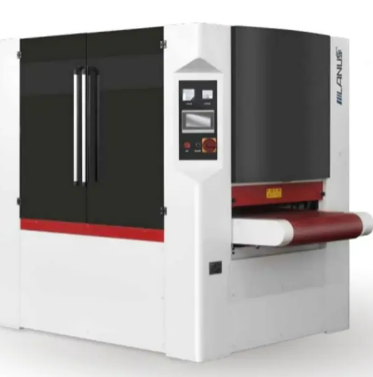
The traditional approach to metal finishing is fragmented. A plate might first go to a heavy grinding machine to remove slag, then to a manual station for edge deburring, and finally to a polishing unit for surface refinement. Each of these steps involves loading, unloading, and transporting heavy materials, which consumes valuable time and increases the risk of workplace injuries. A multi-functional metal plate polishing machine eliminates these redundant steps by housing multiple specialized heads within a single enclosure.
The "One-Pass" philosophy is the core driver of productivity in these advanced systems. A typical configuration might include a high-speed abrasive belt for surface leveling, followed by a planetary brush head for omnidirectional deburring, and a final polishing unit for achieving the desired grain or luster. Because all these actions happen sequentially as the plate moves along a precision conveyor, the "cycle time" per part is slashed. What used to take thirty minutes across three different stations now takes less than sixty seconds. This throughput allows factories to handle larger orders from famous auto parts foreign companies and sheet metal users without increasing their workforce or floor space.
Every time a heavy metal plate is moved by a crane or forklift, the production line stops. Multi-functional machines reduce the need for inter-process transport. Furthermore, these machines are designed with "Efficient Response" in mind, featuring quick-change abrasive systems. An operator can switch from a coarse grinding belt to a fine polishing belt in minutes, rather than hours. This versatility allows a single machine to act as a flexible production cell, capable of handling small batches of diverse products with minimal downtime. In a market that increasingly demands "Customized Services," this flexibility is a vital component of a productive factory.
The productivity of a multi-functional metal plate polishing machine is supported by a foundation of technical excellence. With over 70 patents, LANUSS has integrated features that ensure the machine remains productive even under the most demanding industrial conditions. These features are not merely bells and whistles; they are essential engineering solutions for common fabrication problems.
When processing large metal plates, thickness variations are common. A standard machine might grind too deeply on a thick section, potentially damaging the part, while missing a thinner section entirely. Multi-functional machines utilize "floating" grinding heads equipped with pneumatic or electronic pressure sensors. These heads "sense" the surface of the plate and adjust their height in real-time, maintaining a constant, pre-set contact force. This ensures 100% surface coverage and consistent quality, eliminating the need for manual touch-ups or rework—a major productivity drain in traditional shops.
A truly multi-functional machine, such as the LSG or LSP series, allows for the simultaneous use of different abrasive types. For example, a factory might use a "Wide-Belt" unit for top-surface polishing and a "Rotary Brush" unit for rounding the edges of internal holes. This synergy is particularly important for laser-cut parts that have complex geometries. By combining these functions, the machine ensures that the part is not only smooth on the surface but also safe to handle and ready for coating, achieving the "reliable, round, and beautiful" quality that customers expect.
One of the biggest obstacles to productivity in metal fabrication is the "burr" left behind by cutting processes. Whether using a laser, plasma, or waterjet, these sharp ridges must be removed before the part can be used. Manual deburring is slow, inconsistent, and one of the most disliked tasks in a factory. A multi-functional metal plate polishing machine integrates this function seamlessly.
For plates that have undergone thermal cutting, the LSB series provides heavy-duty slag removal. Slag is the hardened, melted metal that clings to the bottom of the cut. Removing this manually requires hammers and grinders, a process that is loud and dangerous. An automated multi-functional machine uses high-torque abrasive wheels to strip away this slag in seconds. This allows the subsequent polishing units to work on a clean surface, extending the life of the more delicate polishing belts and brushes and further reducing operational costs.
Standard belt sanders often miss the burrs inside small holes or on the interior edges of complex parts. Multi-functional machines solve this through planetary brush technology. These brushes rotate and revolve, hitting the part from every possible angle. This ensures that even the most intricate parts are completely deburred in a single pass. For a factory producing "metal fasteners, mold processing, or auto parts," this level of automated precision is the only way to maintain high-volume productivity without sacrificing quality.
While the initial capital expenditure for a multi-functional polishing machine is higher than that of a single-purpose tool, the ROI (Return on Investment) is significantly more rapid. The economic advantages are felt across the entire "Value Creation" chain of the business.
Labor is a significant portion of any manufacturing budget. A multi-functional machine allows a single operator to do the work that previously required a team of four or five manual finishers. This reduction in headcount allows the business to reallocate its human resources to higher-value activities, such as engineering and quality assurance. Furthermore, because the machine is "intelligent" and automated, it reduces the need for highly specialized manual polishing skills, which are increasingly difficult to find in the modern labor market.
In manual finishing, the "Human Factor" is the leading cause of scrapped parts. An operator might grind too deeply, overheat a section of stainless steel, or miss a critical edge. A multi-functional machine, governed by a "Quality Inspection System," provides perfect repeatability. Once the parameters are set, every plate is processed identically. This drastically reduces material waste and ensures that the factory can deliver on its "business responsibilities" to provide 100% compliant products. In a world of rising raw material costs, the savings from a lower scrap rate are a direct boost to the bottom line.
The ultimate goal of increasing productivity is the move toward "Unmanned Operations." A multi-functional metal plate polishing machine is designed to be a key component of a smart factory. Through integration with robots and manipulators, the machine can operate 24/7 with minimal human oversight.
Productivity is not just about how fast the machine grinds; it is about how fast the material moves. LANUSS provides "Supporting Automation Equipment" that allows for the automatic loading and unloading of metal plates. These conveying systems are synchronized with the machine's PLC (Programmable Logic Controller), ensuring a smooth, continuous flow of material. This "One-Stop Service" approach simplifies the procurement process for the manufacturer and ensures that there are no integration "hiccups" between the machine and the automation.
In an Industry 4.0 environment, data is the key to productivity. Multi-functional machines collect data on every part processed, every kilowatt used, and every minute of belt life. This allows for "Remote Operations and Maintenance," where technicians can monitor the machine's health from halfway around the world. By using predictive analytics, the factory can schedule maintenance before a part fails, preventing unplanned downtime. This data-driven approach allows for the constant optimization of the production process, ensuring that the "pursuit of value" is never interrupted.
A truly multi-functional machine must be able to handle a variety of materials with the same level of efficiency. In a single day, a job shop might need to process heavy carbon steel plates, delicate aluminum sheets, and architectural stainless steel. Each of these materials has unique characteristics that require different processing parameters.
Stainless steel requires precision heat management to prevent discoloration, while aluminum requires specialized dust extraction to mitigate fire risks. Multi-functional machines are designed with these "Material-Specific" needs in mind. The "LSG series" is a prime example, capable of surface polishing and wire drawing on everything from metals to non-metallic materials like wood and PCB. This versatility means the factory does not need a different machine for every material, further maximizing the utility of the floor space and the productivity of the equipment.
Whether a part is aluminum or steel, edge quality is non-negotiable. The LSD series in a multi-functional setup ensures that every part achieves a consistent "R-arc" or rounded edge. This is not just for safety; it is a technical requirement for superior paint and powder coating adhesion. By ensuring that the edges are perfectly prepared, the multi-functional machine increases the "durability" and value of the final product, which is a core pursuit for any "responsible enterprise."
Productivity and safety are inextricably linked. A workplace that is dangerous or unhealthy will always struggle with high turnover and low morale, both of which are productivity killers. A multi-functional polishing machine is an enclosed, safe system that dramatically improves the work environment.
Metal polishing is a "dirty" process that produces significant noise and metallic dust. Multi-functional machines are equipped with integrated dust extraction systems that capture particles at the source. This protects the "family" of workers from respiratory issues and reduces the noise level on the factory floor. By making the factory a cleaner, quieter, and safer place, the machine helps the business attract and retain better talent, which is the long-term engine of productivity.
Manual grinding is physically exhausting and leads to repetitive strain injuries. By automating these tasks, the multi-functional machine takes the physical burden off the human worker. This reduces the number of sick days and insurance claims, further lowering the "Operational Costs" for the business. A healthy workforce is a productive workforce, and the "Social Responsibility" shown by investing in safe equipment pays dividends in employee loyalty and performance.
The beauty of the multi-functional approach is that it is not "one-size-fits-all." Every manufacturing challenge is different, and a professional manufacturer provides "Tailor-Made" solutions. Whether you need a machine for "metal surface grinding, fastener processing, or mold making," the configuration can be adjusted to meet your specific goals.
A productive factory needs more than just a machine; it needs a partner. LANUSS offers a "One-Stop Service" that covers everything from the initial planning and design to the installation, training, and long-term maintenance. This holistic approach ensures that the "Realization of Value" is not a one-time event but an ongoing process. With a cooperative network spanning 20+ countries, the support you need to keep your production line running at peak productivity is always just an "Efficient Response" away.
When you choose a multi-functional machine from a manufacturer with "Best-selling" status in 50+ countries, you are benefiting from a global pool of knowledge. These machines have been tested in the world's most demanding manufacturing environments, from the automotive hubs of Germany to the electronics centers of Asia. This proven track record gives you the confidence that your investment in productivity is based on a "Rigorous Quality Inspection System" that ensures product compliance and durability.
In conclusion, increasing productivity with a multi-functional metal plate polishing machine is a strategic imperative for the modern manufacturer. By integrating multiple finishing steps into a single, automated, and intelligent platform, these machines solve the most pressing challenges of the fabrication industry. They reduce cycle times, slash labor and operational costs, and eliminate the variability of human labor.
Beyond the metrics of speed and cost, a multi-functional machine represents a commitment to "Innovation, Quality, and Responsibility." It creates a safer workplace, produces more durable products, and positions the business as a leader in the era of Industry 4.0. As global markets continue to demand higher quality at lower costs, the multi-functional machine is the primary tool that will allow factories to rise to the challenge. The "Pursuit of Value" is a constant journey, and with the right multi-functional polishing solution, your factory is well-equipped to lead the way.


