
Please Choose Your Language
Views: 0 Author: Site Editor Publish Time: 2026-09-30 Origin: Site
Surface finishing frequently acts as the primary bottleneck in manufacturing throughput. Relying on manual processes slows down production and creates unpredictable quality gaps. You need a reliable method to scale operations effectively. Inconsistent sanding directly leads to coating failures, dimensional inaccuracies, and high manual rework costs. Transitioning from basic commercial tools to a stationary industrial sanding machine standardizes your surface quality. It aligns your output with stringent manufacturing tolerances while drastically reducing labor dependencies.
This guide breaks down various equipment configurations and compares wet versus dry methodologies. We will explore different sanding machine types to help you evaluate capital expenditures confidently. You will learn exactly how to optimize finishing workflows for maximum daily efficiency. Understanding these core concepts ensures your production line runs smoothly and scales profitably.
Industrial vs. Commercial: True industrial sanders prioritize continuous duty cycles, automated feed systems, and integrated thermal/dust management over portability.
Configuration Dictates Outcome: Choosing between a wide belt sanding machine, edge sander, or brush sander depends entirely on part geometry and required stock removal rates.
Material Specificity is Non-Negotiable: A metal sanding machine requires fundamentally different safety and coolant paradigms compared to woodworking equipment to mitigate fire and explosive dust risks.
You cannot optimize a manufacturing floor without understanding the equipment powering it. At its core, an industrial sander operates as a stationary, power-driven system. It utilizes coated abrasives like belts, discs, or brushes to remove material. These machines calibrate part thickness or prepare surfaces for secondary finishing processes. Common secondary processes include powder coating, anodizing, and electroplating.
Heavy-duty sanders rely on a rigid mechanical framework to maintain precision under immense stress. You will generally find three primary mechanical systems at play:
Drive System: These machines use high-torque, continuous-duty motors. Manufacturers design them for constant loads. They prevent stalling when processing dense materials at high speeds.
Tensioning & Tracking: Abrasive belts experience heavy lateral stress during operation. Pneumatic or electronic tracking systems constantly adjust the belt. They maintain perfect alignment and prevent catastrophic belt snapping.
Feed Mechanisms: Operators must secure workpieces safely during high-speed calibration. Industrial units feature heavy-duty conveyor beds. They often incorporate vacuum hold-downs to lock parts firmly in place.
How do we measure a successful deployment? A correctly specified machine drastically reduces per-part finishing time. It achieves measurable consistency across batches. Quality control teams typically measure this using Ra (Average Roughness) or Rz (Mean Roughness Depth) metrics. Additionally, a successful installation operates safely. It must stay within acceptable decibel limits and particulate emission standards dictated by local safety authorities.
Selecting the right architecture dictates your production outcome. You must match the machine to your specific part geometry and stock removal requirements.
This category represents the workhorse of modern manufacturing facilities. The mechanism utilizes wide abrasive belts running over contact rollers and platens. You will find a wide belt sanding machine most useful for high-volume thickness calibration. They excel at veneer sanding and large flat panel finishing.
Evaluation Note: When shopping for these units, look for multi-head configurations. Multiple heads allow you to perform rough material removal and fine finishing in a single pass. This dramatically improves daily throughput.
Flat surfaces are only part of the equation. Edge sanders utilize horizontally or vertically oscillating belts on a stationary platen. They serve a very specific purpose. They are best for solid wood edging, intricate profile sanding, and squaring metal blanks before welding. The oscillation prevents premature wear on a single strip of the abrasive belt.
Irregular topographies require a flexible approach. These machines feature rotating abrasive brushes, often called flapper wheels. The brushes conform naturally to complex surface topographies. They are ideal for distressing wood surfaces. They also excel at deburring irregular metal stampings and performing sealer sanding on molded composite parts.
The cutting edge of finishing involves automation. Robotic sander cells use end-of-arm tooling equipped with orbital or belt sanders. Advanced 3D vision systems guide the robots. They adapt to variations in part positioning. You will see these deployed for complex 3D geometries. Prime examples include aerospace turbine blades and curved automotive body panels.
Managing heat and particulate matter is critical. Your choice between a dry or wet system fundamentally alters your facility infrastructure.
A dry sanding machine relies heavily on ambient air cooling to manage friction heat. The mechanism uses high-velocity, localized vacuum extraction to remove particulate matter instantly.
These systems are ideal for woodworking, composites, plastics, and non-reactive metals. However, they carry a distinct risk profile. You must install robust, compliant dust collection systems. For example, North American facilities must meet NFPA (National Fire Protection Association) standards. Failing to manage dry particulate creates severe combustible dust explosion hazards.
Inspect extraction hoses daily for blockages.
Ground all ductwork to prevent static electricity buildup.
Empty collection bins before they reach 75% capacity.
Some applications generate too much heat for air cooling. A wet sanding machine floods the abrasive and the workpiece with liquid coolant. You will typically use water or a specialized chemical emulsion during operation.
Wet systems are perfect for heavy slag grinding and thick metal deburring. They are mandatory when finishing reactive metals like titanium or aluminum. These metals present a severe risk of heat distortion or ignition. The primary risk profile involves facility logistics. You must manage wastewater disposal. You also need to handle coolant filtration logistics and implement strict rust-prevention workflows for ferrous metals.
Different materials react differently to abrasion. You cannot use a one-size-fits-all approach when configuring your equipment.
Wood processing demands sensitivity to surface variations. Typical applications include calibrating raw MDF boards, smoothing delicate veneers, and preparing cabinet doors for lacquer application.
The critical feature here is the segmented platen. Segmented platens use electronic sensors to adapt to slight panel variations in real-time. They apply uniform pressure across the board. This prevents the abrasive from burning through dangerously thin wood veneers.
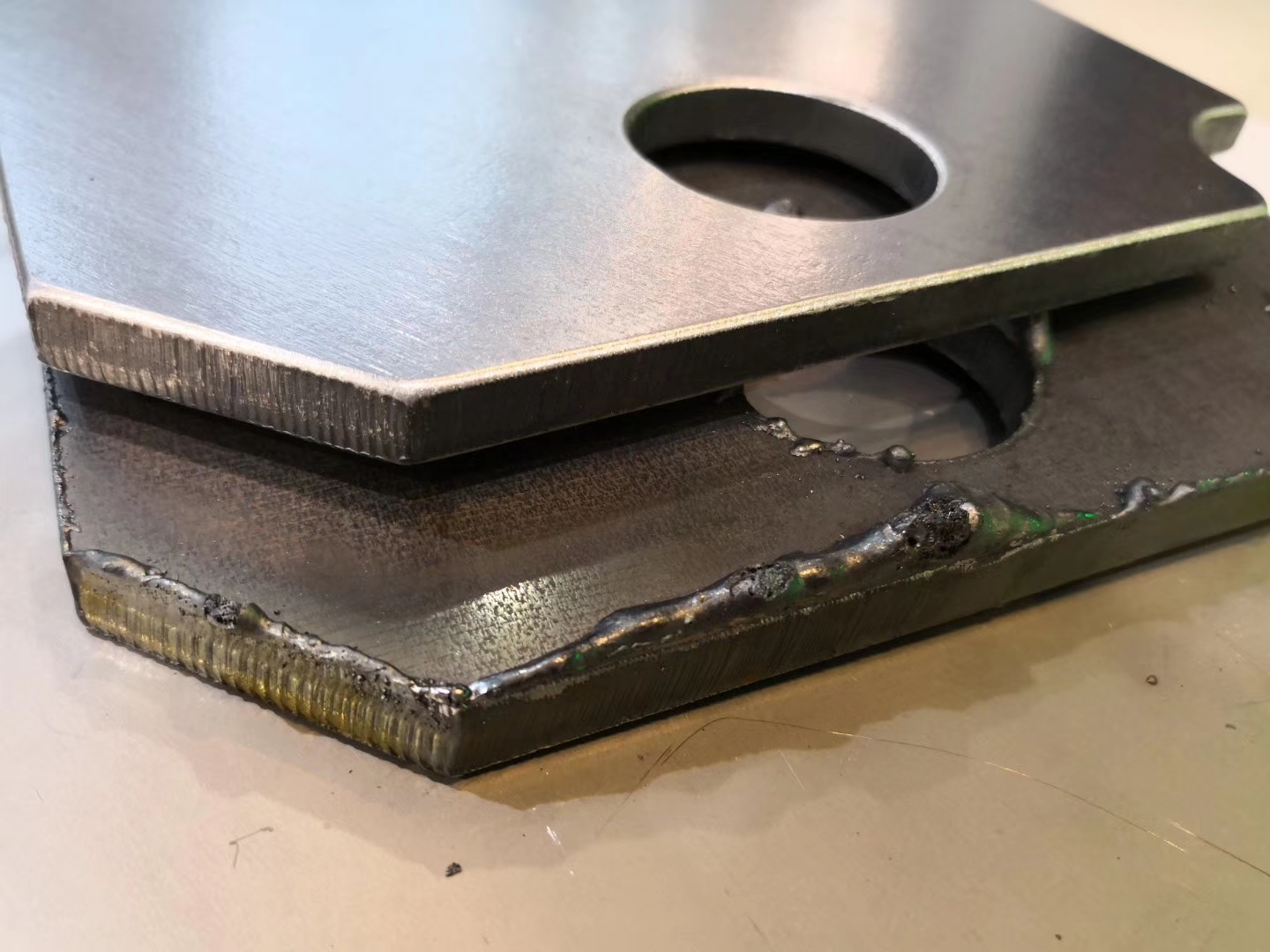
Metal processing requires raw power and heat management. A dedicated metal sanding machine tackles aggressive tasks. Common sanding machine applications in metalworking include slag removal from laser or plasma cutting. They also create specific grain patterns on stainless steel (like a No. 4 finish) and perform edge rounding for optimal powder coat adhesion.
The critical features for metal include heavy-duty steel contact rollers and integrated coolant systems. You will also use highly specialized abrasive grades. Ceramic and zirconia alumina belts withstand the immense heat generated by metal abrasion.
Synthetic materials are highly sensitive to friction. Applications include deflashing freshly molded parts and preparing raw fiberglass for gel coats. The most critical feature for these materials is a Variable Frequency Drive (VFD). A VFD allows operators to lower the belt speed significantly. Slowing the belt prevents friction-induced heat from melting the plastic or composite surface.
Material Type | Primary Application | Critical Machine Feature | Preferred Abrasive Material |
|---|---|---|---|
Wood / MDF | Veneer smoothing, thickness calibration | Segmented platens | Aluminum Oxide |
Steel / Aluminum | Slag removal, edge rounding | Wet coolant integration, heavy rollers | Ceramic / Zirconia |
Plastics / Composites | Deflashing, surface prep | Variable Frequency Drive (VFD) | Silicon Carbide |
Procuring capital equipment requires strict evaluation logic. Do not buy based on brand name alone. Evaluate these four critical dimensions before issuing a purchase order.
You must balance your required speed with available floor space. Calculate the required feed speed in meters per minute. Compare this against your facility layout. Multi-head machines save immense amounts of time because they finish parts in a single pass. However, they require a significantly larger physical footprint. Ensure your forklift drivers still have clearance around the installed machine.
Analyze your workflow to determine the head configuration. Does your process require a single-head setup? Single heads have a smaller footprint but require frequent, manual belt changes between coarse and fine grits. If you process high volumes, you need a multi-head machine. This allows a continuous flow from coarse calibration directly to fine finishing.
Never assume your building has adequate power. Audit your current facility amperage before buying. Large industrial sanders draw massive current. They often require dedicated 480V/3-phase power drops. Furthermore, pneumatic tracking systems require heavy-duty, moisture-free compressed air. Plan for these infrastructure upgrades early.
Your machine is only as good as its extraction system. Verify your existing dust collection systems. You need surplus Cubic Feet per Minute (CFM) capacity. You must also check the static pressure requirements listed in the new machine's specifications. If your current collector is undersized, the machine will pack with dust, leading to belt failure and fire hazards.
Installing the machine is just the beginning. The rollout phase presents several risks that can derail your return on investment.
Unoptimized machines will burn through expensive abrasive belts rapidly. Poorly trained operators often apply too much pressure or run belts at incorrect speeds. You must budget for extensive abrasive trials during the commissioning phase. Work with your abrasive supplier to find the exact grit-to-feed-speed ratio for your specific material.
Modern machines feature intuitive PLC touchscreens and automated thickness settings. However, operators cannot rely entirely on software. They must still understand fundamental abrasive behavior. They need to know how to adjust belt tensioning and perform manual machine calibration. Always plan and budget for vendor-supplied training during installation.
Allowing operators to bypass safety interlocks.
Running parts through the exact center of the belt every time (causes uneven belt wear).
Failing to blow down dust from optical tracking sensors at the end of a shift.
Industrial sanders vibrate intensely. Belt tracking pneumatics and conveyor feed belts require strict preventative maintenance. If you fail to maintain these components, the machine will drift out of calibration. This leads to severe machine jams, snapped abrasive belts, and ultimately, scrapped parts. Implement a weekly preventative maintenance checklist immediately upon installation.
Upgrading to an industrial-grade sanding solution transforms your production floor. It shifts surface finishing from an unpredictable, labor-intensive manual art to a controlled, highly scalable process. By matching the right machine architecture and environment to your specific material, you eliminate bottlenecks and ensure repeatable quality.
Before issuing an RFQ, take immediate action. Document your current daily abrasive usage. Calculate the exact cost of scrapped parts caused by manual sanding errors over the last quarter. Finally, request manufacturers to run sample batches of your actual materials on their demo machines. This evidence-based approach ensures your capital investment delivers immediate operational value.
A: Belt lifespan depends entirely on several variables. Material type, stock removal depth, and feed speed dictate wear rates. Furthermore, proper dust extraction plays a massive role. Excellent extraction prevents the grit from loading with debris. A well-optimized belt processing clean wood might last a full week, whereas aggressive metal slag removal might consume a belt in a single day.
A: You should never mix wood and metal in the same machine. This creates a severe and immediate fire hazard. Metal sanding generates hot sparks. If those sparks enter a dust collection system containing highly combustible dry wood dust, it will trigger a catastrophic explosion. Dedicate machines strictly by material type.
A: A contact roller is typically made of steel or hard rubber. It provides a very small, rigid contact point. It is used for aggressive stock removal and precise thickness calibration. A sanding pad or platen applies flat, distributed pressure over a wider area. Platens are used purely for fine finishing and surface smoothing.
A: Baseline expectations vary widely based on size. However, a typical industrial machine requires between 1,500 to 4,000+ CFM. This depends on the machine's belt width and the number of internal sanding heads. You must always consult the manufacturer's specific spec sheet before connecting your facility's ductwork.


