
Please Choose Your Language
Views: 0 Author: Site Editor Publish Time: 2026-09-21 Origin: Site
Modern fiber lasers offer unprecedented speed for metal fabrication operations. However, they inherently leave sharp 90-degree edges, stubborn micro-burrs, and thermal oxide layers. This remains particularly true when oxygen-cutting mild steel plates. Fabrication shops constantly face a major production bottleneck here. Blistering laser cutting speeds often clash against slow, inconsistent secondary finishing processes. We end up losing valuable productivity while simultaneously compromising final part quality. This article provides production managers and fabrication shop owners an evidence-based framework. You will learn how to evaluate equipment effectively. We move completely beyond manual grinding methods. Our goal helps you achieve consistent, compliance-ready parts safely. Understanding these automated solutions will permanently transform your daily workflow. You can stop relying on unpredictable manual labor. Instead, you gain complete control over your final product quality.
Safety & Compliance: Achieving consistently rounded metal edges is non-negotiable for worker safety and downstream handling.
Coating Durability: A minimum edge radius (often up to 2mm) is strictly required to prevent edge-pulling and ensure paint/powder coating adhesion.
ROI of Automation: Transitioning from manual grinding to a dedicated laser cut edge rounding machine reduces labor dependency, standardizes quality, and eliminates processing bottlenecks.
Multi-Process Capability: Modern equipment frequently combines laser cut edge deburring, edge rounding, and oxide layer removal into a single pass.
Metal fabricators often underestimate the financial impact of poor edge quality. A sharp laser-cut edge invites a severe coating failure risk known as filiform corrosion. We must understand the physics of surface tension on sharp edges during the coating process. Liquid paint naturally pulls away from 90-degree corners as it cures. This phenomenon leaves the very edge dangerously thin or completely exposed to moisture. Rust rapidly develops along these exposed perimeters. Creating perfectly rounded metal edges eliminates this defect entirely by providing a uniform surface for coatings to grip.
Beyond coating failures, sharp edges create severe downstream liabilities. Ergonomic hazards and assembly issues multiply quickly on the shop floor. Unfinished parts directly harm your manufacturing efficiency in several distinct ways:
Severed or frayed wire harnesses during electrical panel assembly.
Poor structural fit-up causing unnecessary welding delays.
High laceration risks for assembly line workers and end-users.
Damaged packaging materials during shipping and transit.
Brand perception also heavily depends on edge quality. Clients evaluate manufacturing professionalism through tangible indicators. Rough, sharp parts signal a lack of attention to detail. Conversely, smooth parts communicate premium value and strict quality control. Delivering perfectly finished components builds lasting customer trust and justifies premium pricing structures.
Manual processing remains the default choice for many small fabrication shops. However, relying on angle grinders and manual files carries immense hidden costs. Human operators cannot consistently hold a specific radius across hundreds of parts. Inconsistent edges lead directly to rejected batches. Furthermore, high consumable waste drains operating budgets rapidly. Grinding discs wear out unevenly and require constant replacement.
Operator fatigue presents another major limitation. Hand grinding is physically exhausting and noisy work. It directly causes high labor turnover in fabrication departments. You inevitably spend excessive time recruiting and training new grinders. The business case for automated edge rounding centers on eliminating these exact headaches. Automated equipment guarantees throughput predictability. Cycle times become strictly standardized. Human error disappears from the finishing equation entirely.
How do you know when manual grinding becomes a financial liability? Review these scalability metrics to evaluate your current production baseline:
Processing more than 500 individual cut parts weekly.
Employing two or more full-time manual finishing operators.
Experiencing final coating rejection rates above two percent.
Running fiber lasers faster than the finishing department can process.
Hitting any of these metrics signals the immediate need for automated capital equipment.
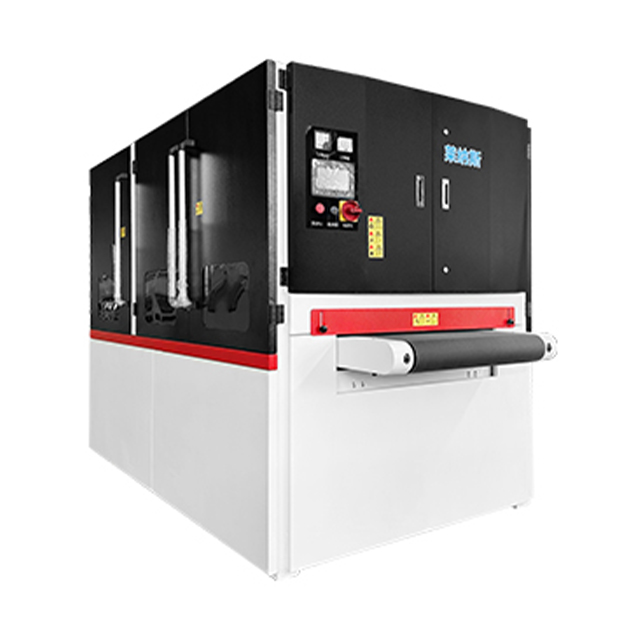
Understanding internal machine mechanics helps you choose the right configuration. A high-quality laser cut edge rounding machine utilizes multiple distinct processing zones. The first zone typically handles primary dross removal. We utilize heavy abrasive belts here. These belts aggressively knock down large burrs and vertical slag left by the cutting bed. Proper laser cut edge deburring prepares the part for the next critical phase.
Following the primary belt, the parts enter the rounding zone. Multi-directional rotary brushes or cross-belt brushes take over here. These brushes use flexible abrasives like Scotch-Brite™ or specialized abrasive wire. They sweep across the part from multiple angles simultaneously. This mechanical action creates uniform, smooth edges across every internal and external contour.
Achieving specific radii requires precise mechanical control. Military specifications and heavy industry often mandate an edge radius up to 2mm. Operators achieve this by dialing in exact downward brush pressure and rotational speed. The flexible abrasives wrap around the sharp corners, wearing them down consistently.
We must also address oxide layer eradication. Standard deburring belts cannot remove the hardened thermal scale left by oxygen laser cutting. Paint will flake off if this scale remains on mild steel. You must equip the machine using specialized hard-wire brush configurations. Alternatively, shops integrate a dedicated laser oxide removal machine module. This aggressive brushing physically fractures and strips the blue-black scale, exposing bare white metal underneath.
System Feature | Dry Mode Processing | Wet Mode Processing |
|---|---|---|
Initial Capital Cost | Generally lower investment | Higher due to coolant systems |
Combustible Dust Risk | High risk (requires strict extraction) | Virtually eliminated by water |
Mixed Material Processing | Requires deep cleaning between metals | Ideal for rapid material changeovers |
Maintenance Requirements | Filter replacements and duct cleaning | Coolant filtration and rust prevention |
Choosing the correct equipment requires evaluating your specific daily workflow. Material agnosticism represents a major deciding factor. You must evaluate a metal edge rounding machine based on your exact material mix. Processing stainless steel, aluminum, and galvanized sheet metal requires different abrasive grades. Ensure the machine allows rapid brush changeovers to maintain productivity between different material runs.
Part size constraints dictate the machine bed technology you need. Processing large panels is relatively straightforward. However, processing parts smaller than three inches requires specialized hold-down techniques. Standard conveyor belts will struggle to grip small items against the aggressive brush pressure. Modern sheet metal edge finishing systems utilize high-powered vacuum tables. Some systems integrate magnetic tracks specifically for securing tiny mild steel components.
Throughput and feed speeds must align with your upstream cutting capacity. A powerful fiber laser can easily overwhelm a slow finishing machine. Connect the machine feed rates directly to your existing laser output. Feed speeds usually range from one to eight meters per minute. Select a feed rate capable of clearing your laser's daily output in a single shift. This prevents shifting the production bottleneck from the cutting bed to the finishing department.
Safety compliance requires serious attention during implementation. Combustible dust presents the single greatest risk in metal finishing. Grinding aluminum creates highly explosive dust particles. Grinding steel creates hot sparks. Mixing aluminum dust and steel dust in the same dry collector triggers a catastrophic thermite reaction. You must absolutely isolate these materials. Implementing NFPA or ATEX-compliant wet or dry dust collectors is mandatory for shop safety.
Operator adoption involves a distinct learning curve. Automated equipment still requires skilled human oversight. Operators must learn how to balance abrasive pressure correctly. They must actively compensate for inevitable brush wear throughout the week. Applying too much pressure leads to over-processing and premature tool wear. Comprehensive OEM training ensures your team maximizes the machine's capabilities quickly.
Layout and workflow integration impact daily efficiency heavily. The physical footprint of a finishing line can be substantial. You must plan the material handling logistics carefully. Parts should flow smoothly from the laser unloader directly to the finishing station. Minimize forklift travel distances. Consider installing gravity conveyors or roller tables to assist operators in feeding heavy plates into the machine continuously.
Never purchase finishing equipment without conducting a rigorous proof of concept phase. Sales brochures cannot guarantee results on your specific materials. Advise your purchasing team to send actual worst-case parts to the OEM. Include parts heavily coated in dross and thick oxide layers. Request sample processing using different machine configurations. This physical evidence provides the most reliable purchasing justification.
Validating the returned samples requires objective measurement. Do not rely solely on visual inspection. Instruct your quality control team to measure the exact radius consistency using a radius gauge. Conduct standard cross-hatch adhesion testing to verify the coating durability. Measure the surface roughness against your target Ra parameters. These quantifiable tests ensure the machine meets your strict quality standards.
Finally, calculate the payback period logically. Measure the current manual labor hours wasted on grinding. Add the financial losses from rejected coated parts. Compare this total monthly waste against the capital lease cost of the new automated machine. In most high-volume shops, the automated equipment easily pays for itself within the first year of operation.
Edge quality is no longer a secondary manufacturing concern. It serves as a primary driver of part durability and shop profitability. Relying on manual angle grinders severely limits your growth potential and endangers product quality. Adopting automated finishing technology permanently eliminates inconsistent edges and severe downstream assembly bottlenecks.
Send your toughest metal parts to OEMs for rigorous sample testing.
Establish clear radius and surface roughness requirements before purchasing.
Ensure your dust collection strategy fully mitigates combustible dust risks.
Train your operators thoroughly to maximize abrasive lifespan and machine efficiency.
Implementing the right equipment transforms a labor-intensive liability into a highly automated, value-add capability. You will capture more demanding contracts while ensuring total compliance and customer satisfaction.
A: Yes. Modern machines utilize multi-head configurations. The initial station uses aggressive grinding belts to remove vertical dross and heavy burrs. The subsequent stations sequence multi-directional rounding brushes. This setup completes heavy deburring and uniform edge rounding in one continuous pass.
A: Standard rounding abrasives do not effectively remove thermal oxide. The scale is extremely hard. Oxide removal requires specific hard-wire brushes rotating at high speeds. These aggressive wire brushes fracture the blue-black scale, exposing bare metal necessary for powder coating adhesion.
A: Minimum part size depends on the machine's hold-down technology. High-friction sticky mats handle moderate sizes. Vacuum conveyor belts secure flat parts down to roughly two inches. For very small mild steel components, specialized magnetic tracks provide the strongest hold against aggressive brush pressure.
A: Abrasive lifespan centers heavily on material hardness, burr severity, and daily machine hours. Processing thick stainless steel with heavy dross wears brushes quickly. Processing thin aluminum extends lifespan. Properly calibrated brushes generally last between 500 and 1000 processing hours before requiring replacement.


