
Please Choose Your Language
Views: 142 Author: Site Editor Publish Time: 2026-08-03 Origin: Site
High-speed fiber lasers have significantly accelerated part cutting across the metal fabrication industry. Consequently, these faster cutting speeds often create a severe bottleneck downstream inside the finishing department. Facility managers frequently confuse deburring and edge rounding. This basic misunderstanding directly leads to misaligned equipment purchases. You might overspend heavily on unnecessary surface polishing features. Alternatively, you could severely bottleneck your daily production by choosing the wrong machine architecture entirely.
Understanding these distinct finishing differences is crucial for operational efficiency. We will provide a thorough technical breakdown. You will learn exactly how deburring and edge rounding differ in both mechanical action and ultimate business outcomes. Furthermore, we offer a clear, actionable framework. You can use these insights to properly select the right equipment, or a combined automated system, tailored perfectly for your shop's actual order mix.
Distinct Purposes: Deburring strictly removes excess material (slag, dross, vertical burrs), while edge rounding shapes the metal to a specific safety or coating standard (e.g., an R2 radius).
The Paint Adhesion Factor: Edge rounding is a non-negotiable prerequisite for powder coating, preventing edge corrosion and paint chipping.
Combined Efficiency: Modern multi-head equipment executes both deburring and edge rounding in a single pass, often processing double-sided to cut cycle times by 50%.
Procurement Logic: Equipment ROI relies on auditing your shop's bulk demand (the 90% of parts) rather than over-specifying for edge-case finishes.
Fabricators commonly use deburring and edge rounding interchangeably. However, they represent two completely different mechanical operations. They require different abrasive media and serve sequential roles in the finishing department.
Deburring strictly focuses on aggressive material removal. It serves as the mandatory first step after a part leaves the cutting table. Thermal cutting methods, like lasers and plasmas, inherently leave behind hardened by-products. Mechanical cutting techniques also leave sharp deformations. Deburring targets these specific flaws.
Operators primarily use deburring to eliminate vertical burrs and laser dross. Additionally, they must remove microtags or pips. Programmers deliberately leave these tiny tabs, typically measuring 0.3mm to 0.5mm. They hold parts in place and prevent them from tipping into the laser bed during high-speed cutting. Removing these rigid tabs requires serious friction.
Machines achieve this primary removal via aggressive abrasives. Grinding belts or hard abrasive blocks tear away the excess metal. They flatten the surface. They do not gently contour the edges. Common mistakes occur when operators try to use soft brushes to remove hardened laser dross. Soft media simply glides over the hard dross, wasting time and ruining the abrasive tool.
Edge rounding focuses entirely on surface profiling. You perform this secondary step only after completing the primary deburring phase. While deburring flattens the surface, it often leaves microscopic vertical scallops or a sharp 90-degree corner. Edge rounding eliminates this residual micro-sharpness.
The mechanical goal involves creating a uniform, continuous smooth radius. A common industrial standard requires a radius up to 2mm. This process gently modifies the metal. It does not aggressively grind down the structural thickness.
Machines achieve this profile via softer, multi-directional rotary brushes. Sometimes they use specialized flexible abrasive blocks. These tools spin and sweep across the edge contours from multiple angles. They gently wrap around the part geometry. Consequently, they achieve a perfect radius without altering your strict part tolerances.
Choosing between these processes requires understanding your final product requirements. Your customer contracts dictate your finishing standards. You must align your equipment strategy with these specific business outcomes.
You must prioritize aggressive deburring when assembly tolerances matter most. Mating parts require perfectly tight fits. Vertical burrs create unwanted interference. They prevent metal panels from aligning flush against one another. Removing these burrs ensures seamless downstream assembly.
Machine tool life represents another critical factor. Un-deburred parts act like destructive saw blades. They can severely damage expensive CNC press brake tooling. Furthermore, sharp dross ruins the suction cups and conveyor belts on downstream automated handling equipment. Prioritizing deburring protects your expensive capital investments across the shop floor.
Prioritizing edge profiling becomes vital for surface protection. Sharp edges actively repel liquid paint and powder coat. Industry experts call this phenomenon "edge thinning." Liquid surface tension pulls the coating away from sharp corners. Rounding the edges ensures uniform coating thickness. Investing in a properly configured edge rounding machine prevents premature paint flaking and subsequent edge corrosion.
Ergonomics and safety also demand properly rounded edges. End-users and assembly workers handle these parts manually. A sharp 90-degree steel corner easily slices through heavy work gloves. Proper edge rounding completely eliminates these workplace safety hazards.
Finally, strict industry compliance often mandates this process. Food-grade processing equipment requires perfectly smooth contours. Microscopic crevices harbor dangerous bacteria. Smooth, rounded edges eliminate these hidden bacterial breeding grounds.
Finishing Process | Primary Business Outcome | Key Industry Application |
|---|---|---|
Deburring | Preserves mating tolerances and protects machinery. | Heavy structural steel, internal chassis components. |
Edge Rounding | Ensures paint adhesion and eliminates safety hazards. | Architectural panels, consumer-facing products, food-grade tech. |
Fabrication shops must decide how to physically deploy these processes. Machine architecture drastically impacts daily throughput. You can choose isolated stations or integrated systems.
Historically, shops used separate manual stations. They utilized dedicated machines for each specific task. An operator would grind the burrs flat on one machine. Next, they would physically carry the batch to a separate brush station for profiling. This disjointed workflow wasted massive amounts of labor.
Advanced automation now changes the game completely. Modern designs utilize modular heads within a single machine frame. A sheet metal part enters the conveyor. First, a heavy grinding belt executes primary deburring. Immediately after, multi-directional rotary brushes execute the edge rounding. The part emerges completely finished.
The most impactful advancement involves double-sided processing. Advanced machines process the top and bottom of a sheet metal part simultaneously. They utilize abrasive heads positioned both above and below the conveyor line.
The ROI impact is immediate. Double-sided processing drastically reduces material handling. Operators no longer waste time flipping heavy, sharp plates. This effectively slashes cycle times by up to 50%. It also significantly lowers safety risks associated with manual part manipulation.
Combined machines offer incredible efficiency. However, you must manage material cross-contamination risks carefully. Processing carbon steel and stainless steel on the exact same abrasive media causes severe issues. Carbon steel dust embeds into the brushes. When you run stainless steel next, those ferrous particles transfer over. The stainless steel part will quickly rust.
Combined machines must offer specific features to combat this. You need independent, quick-change brush groups. Operators swap them out between different metal runs. Alternatively, you can utilize wet/dry configurations to safely process mixed materials without airborne contamination.
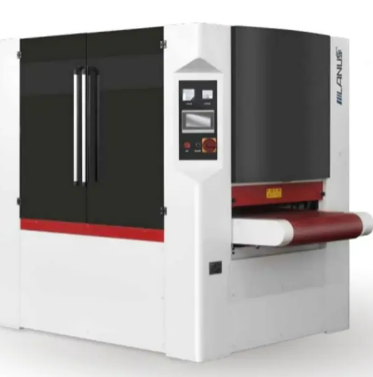
Purchasing finishing equipment requires careful operational analysis. Buying a machine based purely on maximum specifications often leads to wasted capital. You must analyze your historical production data.
Facility managers should strictly follow the "90% Rule" of procurement. Avoid the "one size fits all" trap entirely. Purchasing a complex edge rounding machine capable of generating a mirror polish is a wasted investment if only 3% of your daily orders actually require it.
Consider a practical audit example. Suppose your shop data shows 60% of parts require coating prep. Another 30% require a bare safe-edge for manual handling. The remaining 10% leave the shop unfinished. In this scenario, your core machine priority must be standard deburring and edge rounding. You do not need heavy slag removal. You absolutely do not need cosmetic graining features. Buy the machine that handles the 90% efficiently.
You must rigorously evaluate part dimension flexibility. Ensure the machine footprint aligns perfectly with your minimum and maximum part sizes. Small parts present unique conveying challenges.
Evaluate the Conveyor Bed: Determine whether the machine uses a standard high-friction belt, a vacuum bed, or a magnetic track.
Test Small Parts: Standard belts often fail to grip tiny items securely. If you cut parts "as small as a business card," you absolutely need a vacuum or magnetic hold-down system to prevent them from flying into the spinning abrasives.
Measure Maximum Width: Ensure the machine throat easily accommodates your largest 60-inch panels without requiring multiple staggered passes.
Modern finishing equipment features sophisticated technology. You must evaluate internal software and sensor capabilities before signing a purchase order. These hidden features dictate your daily operating costs.
Abrasive belts and brushes wear down continuously. Historically, operators guessed when to lower the abrasive heads. Guessing leads to inconsistent edge quality. Look for systems utilizing advanced photoelectric sensors.
These sensors automatically measure abrasive wear in real-time. They feed data directly to the PLC, which automatically adjusts the Z-axis. This precise calibration guarantees consistent edge quality all day long. It completely removes manual operator guessing from the equation.
Modern job shops process high-mix, low-volume runs. You might run thick steel plates in the morning and thin aluminum sheets after lunch. Frequent changeovers historically killed productivity.
Look for systems offering barcode scanners. The operator scans the route sheet, and the machine instantly adjusts its pressure settings. Pre-programmed material recipes drastically reduce downtime. The machine remembers the perfect speed and depth for every part in your catalog.
You must choose between dry and wet grinding architectures. Each carries distinct operational tradeoffs.
Dry Grinding: This setup offers a much lower initial unit cost. It remains the ideal choice for standard carbon steel processing. It requires automated dust collection systems but avoids coolant mess.
Wet Grinding: This becomes strictly necessary for processing mixed metals safely. Mixing aluminum and steel dust creates a highly combustible hazard. Water eliminates this explosion risk. However, wet grinding requires much heavier daily maintenance for proper coolant filtration and sludge management.
Deburring and edge rounding are clearly not interchangeable terms. They remain highly specific, sequential processes serving completely different operational goals. Deburring handles the aggressive removal of slag and burrs to protect downstream machinery. Edge rounding meticulously profiles the metal to guarantee paint adhesion and user safety.
We recommend a highly cautious procurement strategy. Do not buy a machine based on a glossy spec sheet alone. Action-oriented next steps include:
Gather a diverse batch of your most problematic laser-cut parts, specifically those harboring stubborn microtags or heavy dross.
Send these parts directly to the equipment manufacturer for a rigorous, time-studied test run.
Verify the exact cycle time required to process the batch.
Physically measure the finished edge radius to ensure it meets your specific coating requirements.
Taking these practical steps ensures you finalize your capital expenditure intelligently, eliminating finishing bottlenecks once and for all.
A: No. Surface grinders are precision machining tools designed exclusively to make faces perfectly flat to highly tight tolerances. They cannot wrap around a contour to break a sharp edge or efficiently remove hardened laser slag.
A: Edge rounding brushes are generally too soft to remove 0.5mm steel microtags efficiently. A primary deburring belt must be used first. It aggressively grinds the metal tag flat before the softer rounding brushes can profile the edge.
A: No. Chamfering aggressively cuts a specific, angled bevel (typically 45 degrees) into the edge, usually intended for subsequent weld preparation or hardware countersinking. Edge rounding instead creates a smooth, continuous convex curve primarily for safety and coating adhesion.


